

Owning a swimming pool in Southern California comes with major advantages. With warm weather nearly year-round, homeowners in San Diego and nearby communities can enjoy outdoor living during every season. However, frequent pool use also means regular upkeep is necessary to keep water clean, equipment functioning properly, and surfaces looking their best.
A neglected pool can quickly develop cloudy water, algae growth, chemical imbalances, and costly mechanical issues. Even small maintenance tasks that are skipped for several weeks can lead to repairs that are far more expensive than routine care. Consistent upkeep also helps improve swimmer comfort while extending the lifespan of filters, pumps, heaters, and pool finishes.
Dust, leaves, sunscreen residue, and debris from coastal winds can build up faster than many homeowners expect. Families with children, pets, or frequent guests often notice that their pools require even more attention during warmer months. By following a structured routine, pool owners can prevent larger problems before they start.
Having a clear schedule for cleaning, water testing, and equipment inspections makes pool ownership far less stressful. Whether you handle maintenance personally or hire a professional service, staying organized helps protect your investment while always keeping the pool ready for use.

Daily Tasks That Help Prevent Bigger Problems
Daily pool maintenance may sound time-consuming, but most tasks only take a few minutes. These small habits can dramatically reduce the chance of algae outbreaks, chemical issues, or circulation problems.
One of the simplest daily tasks is removing floating debris. Leaves, bugs, and dirt that remain in the water too long can stain surfaces and place additional strain on the filtration system. Using a skimmer net each day keeps the pool looking cleaner while improving water circulation.
Checking water levels is another important habit. In Southern California’s warm climate, evaporation happens quickly, especially during summer. If water levels drop too low, the skimmer may pull in air instead of water, potentially damaging the pump.
Pool owners should also take a quick look at water clarity. Clear water is often the first sign that chemical balance and filtration are functioning properly. If water begins looking dull, cloudy, or slightly green, immediate action can prevent the issue from worsening.
Running the circulation system daily is equally important. Most residential pools require several hours of filtration each day to distribute chemicals evenly and remove contaminants effectively. Pools that receive heavy usage may need longer circulation periods during hotter months.
A quick visual inspection of pool equipment can also help identify leaks, unusual noises, or pressure issues before they become serious about mechanical problems.
Weekly Cleaning Habits That Keep Water Balanced
Weekly maintenance typically involves deeper cleaning tasks that help maintain water quality and prevent buildup. These routines are especially important for pools exposed to heavy sun, wind, or frequent swimmers.
Brushing pool walls and steps helps prevent algae and calcium accumulation. Areas with limited circulation are more likely to develop buildup over time, especially near corners, ladders, and tile lines. Brushing these surfaces weekly keeps the pool looking fresh while reducing staining.
Vacuuming is another key part of weekly maintenance. Even pools with automatic cleaners can benefit from occasional manual vacuuming to remove fine debris that settle on the floor. Sand, dirt, and small particles often collect after windy days common throughout Southern California.
Water testing should also happen at least once a week. Maintaining balanced chemistry protects swimmers while helping equipment operate efficiently. Important levels to monitor include chlorine, pH, alkalinity, and calcium hardness. Imbalanced water can cause skin irritation, cloudy water, scaling, or corrosion.
Pool filters should be inspected regularly as well. Dirty filters reduce circulation efficiency and force pumps to work harder. Depending on the filter type, homeowners may need to backwash, rinse, or clean cartridges weekly during periods of heavy pool use.
Tile cleaning is another useful weekly task. Water evaporation often leaves mineral deposits along the tile line, particularly in areas with hard water. Addressing buildup early helps prevent permanent staining and keeps the pool visually appealing.
Monthly Maintenance That Protects Pool Equipment
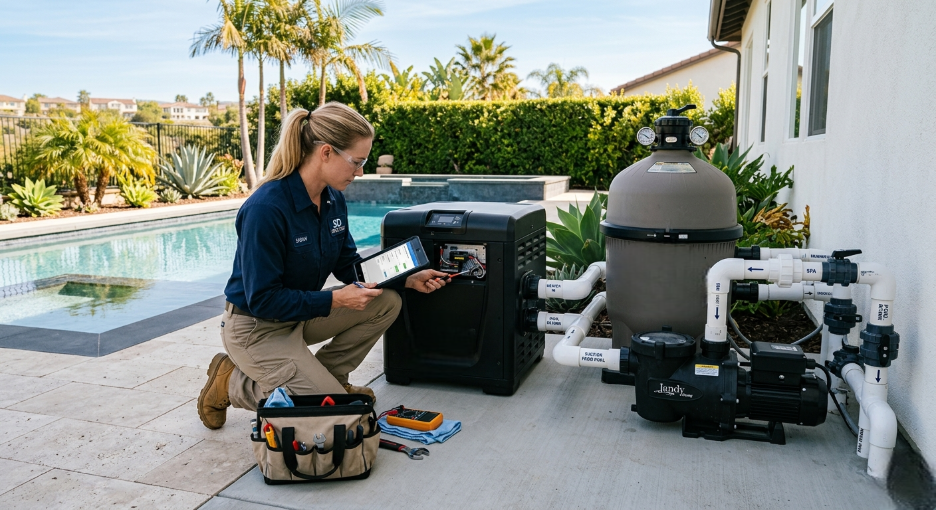
Monthly pool care focuses more heavily on long-term protection and system performance. These tasks help extend the life of expensive components while improving overall efficiency.
One important monthly step is inspecting the pool pump and motor. Strange sounds, reduced pressure, or leaking seals may indicate developing mechanical issues. Catching these problems early can help homeowners avoid sudden breakdowns during peak swimming season.
Checking pool plumbing connections is also recommended. Small leaks can gradually increase water bills while damaging nearby surfaces or landscaping. Southern California homeowners dealing with drought restrictions may especially benefit from identifying leaks quickly.
Pool heaters should also be inspected periodically. Even if heating systems are not used daily, buildup and wear can affect performance over time. Cleaning heater components and checking airflow around the unit can improve efficiency and reduce energy usage.
Automation systems and timers deserve attention as well. Many modern pools use automated controls for lighting, heating, and circulation schedules. Reviewing these settings monthly helps ensure systems are operating correctly and efficiently.
It is also helpful to inspect pool decking and surrounding drainage areas. Cracks, standing water, or shifting surfaces can create safety concerns if left unaddressed. Routine inspections help homeowners maintain both appearance and functionality around the pool area.
Deep chemical treatments may also be performed monthly depending on pool usage. Shock treatments help eliminate contaminants that regular chlorine levels may not be fully removed. Pools used heavily during summer parties or family gatherings often benefit from periodic shocking.
Seasonal Changes That Affect Pool Maintenance Needs
Although Southern California has relatively mild weather, seasonal changes still impact pool maintenance routines. Understanding how conditions shift throughout the year helps homeowners prepare their pools more effectively.
During spring, pollen and wind often increase debris accumulation. Pool owners may notice that skimming and filter cleaning have become more frequent during this period. Spring is also a good time to inspect equipment before peak summer use begins.
Summer places the greatest demand for pools. Higher temperatures, intense sunlight, and increased swimmer activity can quickly reduce chlorine levels. Water evaporation also becomes more noticeable, requiring more frequent refilling and chemical adjustments.
Fall introduces additional debris from surrounding trees and landscaping. Leaves that remain in the water too long can clog skimmers and stain pool surfaces. Adjusting cleaning schedules during autumn helps maintain water clarity.
Even winter requires some level of maintenance in San Diego and Southern California. While freezing temperatures are uncommon, pools still need circulation, filtration, and chemical monitoring. Ignoring winter maintenance can lead to algae growth and water imbalance before warmer weather returns.
Seasonal inspections are also a good opportunity to evaluate overall pool conditions. Homeowners may decide to schedule resurfacing, equipment upgrades, lighting improvements, or energy-efficient system replacements during slower months.
When Professional Pool Service Makes Sense

Many homeowners start by handling maintenance themselves but eventually decide professional service offers greater convenience and consistency. Busy schedules, travel, and larger pools can make regular upkeep difficult to manage alone.
Professional pool technicians bring experience that helps identify problems early. They can often detect issues with circulation, filtration, or water chemistry before homeowners notice visible symptoms. Preventive maintenance frequently reduces repair costs over time.
Hiring a professional can also improve chemical accuracy. Overusing chemicals may damage pool surfaces or equipment, while under-treatment can create unsafe swimming conditions. Experienced technicians understand how weather, water temperature, and usage affect chemical needs.
For homeowners in Southern California, professional service can be especially valuable during high-use summer months. Pool companies often provide weekly cleaning, equipment inspections, chemical balancing, and seasonal maintenance plans tailored to the property.
Modern pool systems have also become more advanced. Automation features, variable-speed pumps, saltwater systems, and smart controls may require specialized knowledge for proper maintenance. Professional guidance helps homeowners maximize energy efficiency while avoiding operational problems.
Whether maintenance is fully outsourced or partially managed by the homeowner, following a structured routine keeps pools cleaner, safer, and more enjoyable throughout the year.
Schedule Your Free Pool Design Consultation Today
Dreaming of a backyard oasis? Majestic Pools & Spas—San Diego’s award-winning custom pool designer and builder—is here to make it a reality. Schedule your free, no-obligation consultation today and take advantage of our limited-time offer: a complimentary custom pool design when you choose to build with us. Start your journey to a stunning new pool by booking online
Majestic Pools & Spas (Visit our showroom)
- Address: 9951 Businesspark Ave Suite A, San Diego, CA 92131
- Phone: +1 858-790-9919
- website: https://www.majesticpools.net/

