

In San Diego and Southern California, outdoor space is valuable. Many homeowners want a pool, but smaller lots, narrow side yards, slope conditions, and zoning setbacks can make design decisions more complex. In these situations, pool shape isn’t just a visual choice—it directly affects how usable your yard feels after construction.
A poorly chosen design can make a space feel crowded or disconnected from the rest of the property. The correct shape, on the other hand, can visually open the yard, improve circulation, and allow room for seating, landscaping, or outdoor kitchens. Climate also plays a role; with year-round pool use in Southern California, functionality matters as much as appearance.
Understanding how different pool shapes interact with limited space helps homeowners avoid common regrets and create a backyard that feels intentional rather than squeezed.
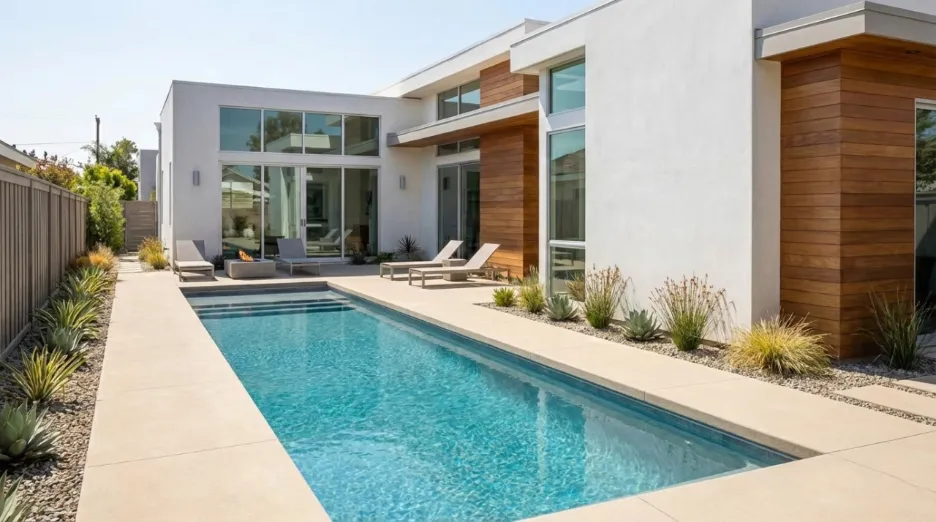
How Rectangle Pools Perform in Limited Spaces
Rectangle pools are often the go-to solution for smaller yards because of their efficient footprint. Their straight edges align easily with property lines, fences, and modern home architecture, making them easier to position without wasting space.
From a design standpoint, rectangular pools create clean visual lines that can make a yard feel longer or wider than it is. This works exceptionally well in San Diego neighborhoods with narrow lots or urban infill homes. They also integrate smoothly with decks, patios, and automatic covers, which is useful when space is limited.
Functionally, rectangular pools offer predictable swim lanes and consistent depths, appealing to homeowners who want exercise options rather than purely decorative water features. They also tend to simplify permitting and construction, thereby reducing build time and overall costs in tighter spaces.
When Freeform Pools Make Sense in Small Backyards
Freeform pools take a more organic approach, using curves and asymmetry to blend into the surrounding landscape. In smaller yards, this can work well when the property has irregular boundaries, slopes, or existing features that a straight-line pool would fight against.
In Southern California, freeform designs often pair beautifully with drought-tolerant landscaping, natural stone, and resort-style finishes. Curves can soften the appearance of a compact yard and help disguise limited dimensions, making the space feel less rigid.
However, freeform pools require careful planning in tight environments. Poorly executed curves can eat up usable deck space or create awkward gaps that are hard to furnish. When done right, though, a freeform pool can transform a small yard into a visually rich outdoor retreat.
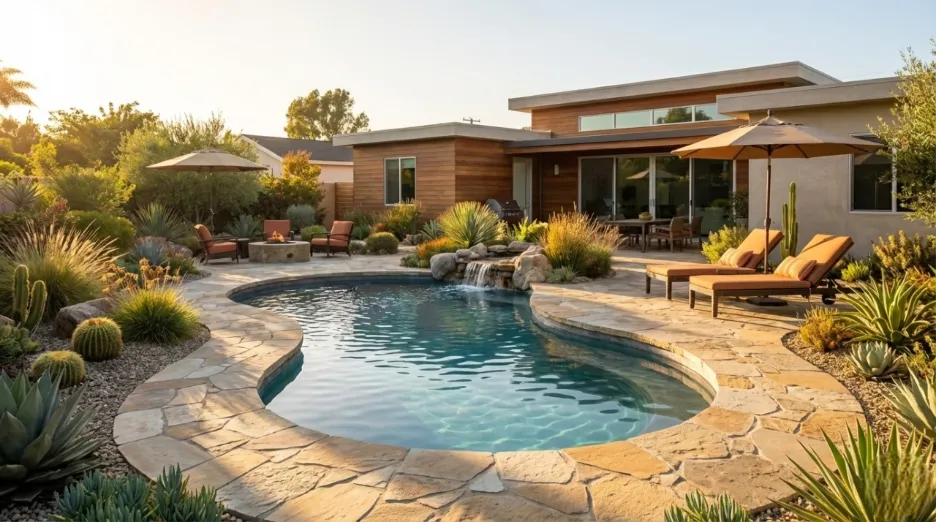
Visual Impact and Layout Considerations
One of the most significant differences between these shapes is how they influence sightlines and movement. Rectangle pools create structure and symmetry, which often complements contemporary San Diego homes and coastal modern designs. They make it easier to plan furniture layouts and walkways because everything follows predictable angles.
Freeform pools draw the eye along curves, creating a sense of flow and movement. This is especially effective in yards where straight lines would emphasize tight dimensions or awkward lot shapes. Landscaping plays a significant role here—plant placement, lighting, and hardscape edges can either enhance or diminish the effect.
Homeowners should think beyond the pool itself and consider how people will move through the space, where seating will go, and how the pool will look from inside the home.
Budget, Maintenance, and Long-Term Use
In many cases, rectangular pools are more cost-efficient to build and maintain. Their simpler geometry often means less labor, more standardized materials, and easier cleaning. This can be appealing for homeowners who want a clean look without long-term complexity.
Freeform pools may require more customized construction and ongoing maintenance, particularly around curved edges and integrated landscaping. That said, many Southern California homeowners see this as a worthwhile investment for a more personalized backyard experience.
Long-term use is another factor. Rectangle pools often favor lap swimming and family activities, while freeform pools lean toward lounging, entertaining, and visual appeal. The right choice depends on how the pool will actually be used over time, not just how it looks on day one.
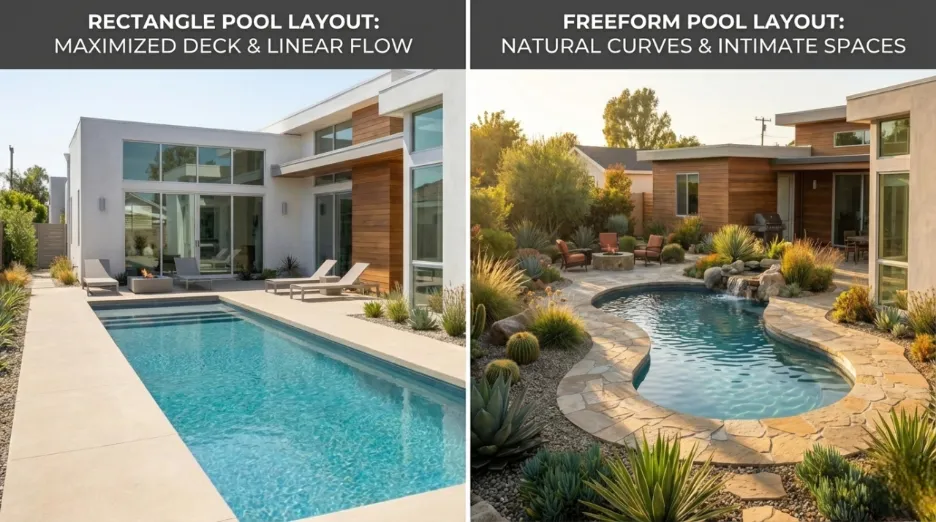
Choosing the Right Shape for Your Property and Lifestyle
There is no universal answer for pool shape in a compact yard. The best results come from evaluating the property’s layout, the home’s architectural style, and how the space will be used year-round. In San Diego’s climate, outdoor areas become extensions of the house, so cohesion matters.
Some homeowners prioritize clean lines and efficiency, while others want a softer, resort-inspired atmosphere. Both rectangular and freeform pools can succeed in small spaces when intentionally designed and paired with smart hardscaping and landscaping.
Working with a local pool builder who understands Southern California lot constraints, permitting, and design trends can make the difference between a backyard that feels cramped and one that feels thoughtfully designed.
Schedule Your Free Pool Design Consultation Today
Dreaming of a backyard oasis? Majestic Pools & Spas—San Diego’s award-winning custom pool designer and builder—is here to make it a reality. Schedule your free, no-obligation consultation today and take advantage of our limited-time offer: a complimentary custom pool design when you choose to build with us. Start your journey to a stunning new pool by booking online
Majestic Pools & Spas (Visit our showroom)
- Address: 9951 Businesspark Ave Suite A, San Diego, CA 92131
- Phone: +1 858-790-9919
- website: https://www.majesticpools.net/

