

San Diego’s climate may be mild most of the year, but seasonal storms and wildfire conditions create a unique set of challenges for pool owners. Heavy rain introduces runoff filled with dirt, oils, fertilizers, and debris that can quickly overwhelm pool filtration systems. At the same time, wildfire ash carries fine particles and minerals that alter water chemistry and stain pool surfaces if left untreated.
Unlike regions with consistent rainfall, Southern California pools are often optimized for dry conditions. When storms arrive, they expose vulnerabilities in circulation, drainage, and chemical balance. Without proactive care, what looks like harmless rainwater can lead to cloudy water, algae blooms, corrosion, or expensive equipment repairs.
Understanding how these seasonal factors interact with your pool is the first step toward protecting your investment and keeping your backyard usable year-round.

Managing Water Chemistry After Heavy Rainfall
Rainwater may appear clean, but it dramatically affects pool chemistry. Sudden dilution lowers sanitizer levels and destabilizes pH, creating conditions where bacteria and algae thrive. Organic debris washed into the pool further increases chlorine demand, forcing your system to work harder to maintain balance.
After storms, testing water chemistry should be an immediate priority. pH, alkalinity, and chlorine levels often require adjustment to restore safe swimming conditions. Skipping this step can allow contaminants to linger, leading to discoloration or unpleasant odors that are difficult to correct later.
Consistent post-storm testing and precise chemical corrections help prevent long-term damage and reduce the need for aggressive treatments that stress pool surfaces and equipment.
Protecting Pool Equipment From Moisture and Debris
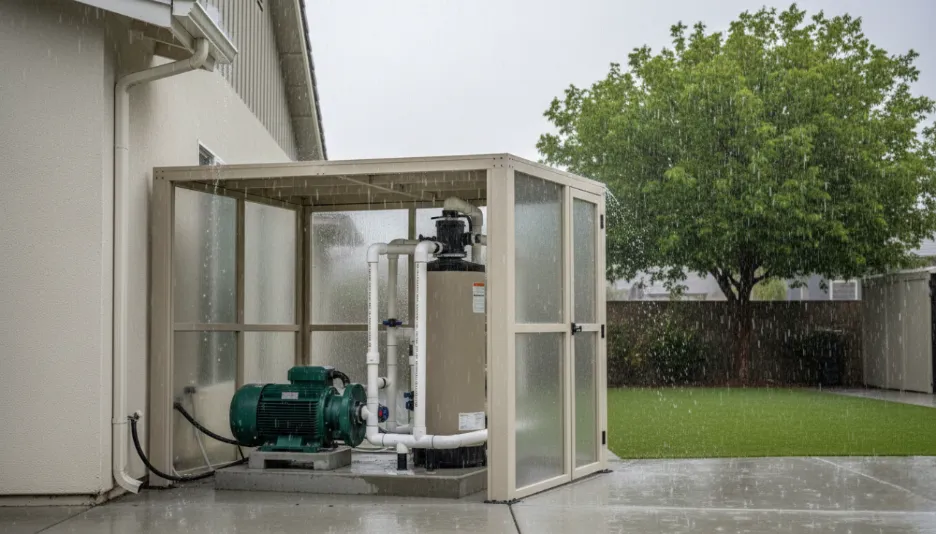
Rain and ash don’t just affect the water—they put strain on pumps, filters, heaters, and automation systems. Excess debris can clog skimmers and filters, restrict water flow, and increase pressure within the system. Moisture intrusion around electrical components can also shorten equipment lifespan.
Ensuring that drainage around your pool pad is clear helps prevent standing water from pooling near sensitive components. Regularly cleaning skimmer baskets and checking filter pressure after storms keeps circulation running efficiently. In areas affected by ash, fine particles may bypass basic filtration and require more frequent filter cleaning or backwashing.
Well-maintained equipment not only performs better during storms but also avoids costly breakdowns during peak swim season.
Managing Water Chemistry After Heavy Rainfall
Rainwater may appear clean, but it dramatically affects pool chemistry. Sudden dilution lowers sanitizer levels and destabilizes pH, creating conditions where bacteria and algae thrive. Organic debris washed into the pool further increases chlorine demand, forcing your system to work harder to maintain balance.
After storms, testing water chemistry should be an immediate priority. pH, alkalinity, and chlorine levels often require adjustment to restore safe swimming conditions. Skipping this step can allow contaminants to linger, leading to discoloration or unpleasant odors that are difficult to correct later.
Consistent post-storm testing and precise chemical corrections help prevent long-term damage and reduce the need for aggressive treatments that stress pool surfaces and equipment.
Protecting Pool Equipment From Moisture and Debris
Rain and ash don’t just affect the water—they put strain on pumps, filters, heaters, and automation systems. Excess debris can clog skimmers and filters, restrict water flow, and increase pressure within the system. Moisture intrusion around electrical components can also shorten equipment lifespan.
Ensuring that drainage around your pool pad is clear helps prevent standing water from pooling near sensitive components. Regularly cleaning skimmer baskets and checking filter pressure after storms keeps circulation running efficiently. In areas affected by ash, fine particles may bypass basic filtration and require more frequent filter cleaning or backwashing.
Well-maintained equipment not only performs better during storms but also avoids costly breakdowns during peak swim season.
Preventing Surface Staining and Structural Damage
Wildfire ash contains metals and minerals that can settle on pool surfaces, especially plaster, tile, and grout. When combined with rainwater, these particles can bond to surfaces and cause stubborn stains. Over time, untreated buildup may lead to etching or discoloration that requires professional resurfacing.
Prompt removal of ash and debris is essential. Skimming the surface, vacuuming settled particles, and brushing walls and steps help prevent staining before it sets. Maintaining proper water balance also plays a critical role, as imbalanced chemistry increases the likelihood of surface damage.
Protecting finishes during storm season preserves both the appearance and structural integrity of your pool.
Smart Use of Pool Covers and Drainage Solutions
Pool covers can be a powerful defense during stormy periods, but only when used correctly. A properly fitted cover prevents debris, ash, and runoff from entering the water while reducing chemical loss. However, covers must be monitored to avoid sagging or overflow that dumps contaminated water back into the pool.
Equally important is managing the surrounding landscape. Ensuring that deck drains, yard grading, and downspouts direct water away from the pool minimizes runoff contamination. Even small adjustments can significantly reduce the number of debris entering the water during heavy rain.
These preventative measures work together to reduce cleanup time and maintain water quality throughout the season.

When Professional Pool Care Makes the Difference
Seasonal weather patterns in Southern California are unpredictable, and even diligent homeowners can struggle to keep up during extended rain or wildfire events. Professional pool care services bring expertise, specialized testing, and equipment designed to handle sudden environmental changes.
Routine service during storm season ensures faster response to chemical imbalances, equipment issues, and debris buildup. Professionals can also identify early signs of damage that might go unnoticed until repairs become more expensive.
Partnering with a trusted local pool service helps safeguard your pool through challenging conditions while giving you peace of mind year-round.
Schedule Your Free Pool Design Consultation Today
Dreaming of a backyard oasis? Majestic Pools & Spas—San Diego’s award-winning custom pool designer and builder—is here to make it a reality. Schedule your free, no-obligation consultation today and take advantage of our limited-time offer: a complimentary custom pool design when you choose to build with us. Start your journey to a stunning new pool by booking online
Majestic Pools & Spas (Visit our showroom)
- Address: 9951 Businesspark Ave Suite A, San Diego, CA 92131
- Phone: +1 858-790-9919
- website: https://www.majesticpools.net/

