

Pool algae is one of the most common frustrations for homeowners throughout San Diego and Southern California. One day your pool looks sparkling and inviting, and the next, you notice green patches, cloudy water, or slippery surfaces developing along the walls and floor. Once algae take hold, it can be difficult and expensive to remove. Fortunately, preventing it is much easier than treating a full-blown outbreak.
The combination of warm temperatures, abundant sunshine, and year-round pool use in Southern California creates ideal conditions for algae growth. By understanding what causes algae and following a consistent maintenance routine, homeowners can enjoy cleaner water, lower maintenance costs, and a healthier swimming environment all year long.

Understand What Causes Algae Growth
Algae are microscopic plant-like organisms that naturally exist in the environment. They can enter your pool through wind, rain, dust, leaves, swimsuits, and even pool equipment. Under the right conditions, algae can multiply rapidly and spread throughout the water.
Several factors contribute to algae growth:
- Poor water circulation
- Inconsistent sanitization
- Improper chemical balance
- Excess debris and organic matter
- Warm water temperatures
- Inadequate filtration
Southern California's sunny climate provides abundant warmth and sunlight, which can accelerate algae growth if water chemistry is neglected. Even a short period of reduced sanitizer levels can create an opportunity for algae to establish itself.
The key to maintaining a healthy pool is eliminating the conditions that allow algae to thrive before it becomes visible.
Maintain Proper Water Chemistry Year-Round
Balanced water chemistry is one of the most effective defenses against unwanted growth in your pool. When sanitizer levels drop or pH becomes unstable, water quality deteriorates and algae can quickly gain a foothold.
Homeowners should regularly monitor:
- Free chlorine levels
- pH balance
- Total alkalinity
- Calcium hardness
- Cyanuric acid levels
When these factors remain within recommended ranges, sanitizers work more effectively and water stays clearer.
Many pool owners make the mistake of only testing water when a problem appears. Preventive testing helps identify small imbalances before they become major issues. During warmer months, more frequent testing may be necessary because heat and sunlight can reduce sanitizer effectiveness more quickly.
In coastal communities throughout San Diego County, environmental factors such as wind, salt air, and increased debris can also influence water chemistry, making routine monitoring especially important.
Keep Water Moving and Improve Circulation

Stagnant water creates ideal conditions for algae growth. Proper circulation helps distribute sanitizers evenly, prevents dead zones, and improves overall water quality.
Your pool pump serves as the heart of the circulation system. Running it for an appropriate number of hours each day helps ensure that water continually passes through the filtration system.
Areas that commonly experience poor circulation include:
- Pool corners
- Steps and benches
- Attached spas
- Shallow shelves
- Areas behind ladders
These locations often become the first places where algae begin to develop.
Adjusting return jets, cleaning skimmer baskets, and ensuring adequate pump performance can significantly improve circulation. Variable-speed pumps, which are increasingly popular among Southern California homeowners, provide efficient circulation while reducing energy costs.
Consistent water movement not only discourages algae but also helps maintain even chemical distribution throughout the pool.
Clean Surfaces Before Problems Develop
Many homeowners underestimate the importance of physical cleaning. Even when water chemistry appears balanced, algae can begin forming surfaces where debris accumulates.
Regular brushing helps remove microscopic growth before it becomes visible. It also prevents algae from attaching to pool walls and creating protective layers that make treatment more difficult.
Areas that deserve special attention include:
- Pool walls
- Floor surfaces
- Waterline tiles
- Steps and ledges
- Corners and crevices
Vacuuming is equally important because it removes organic material that can serve as a food source for algae.
Leaves, dirt, pollen, and other debris frequently enter pools throughout Southern California, particularly during windy conditions and seasonal weather changes. Removing these contaminants promptly helps maintain cleaner water and reduces the likelihood of algae development.
A weekly cleaning routine often saves significant time and expense compared to dealing with a severe algae outbreak later.
Optimize Filtration and Equipment Performance
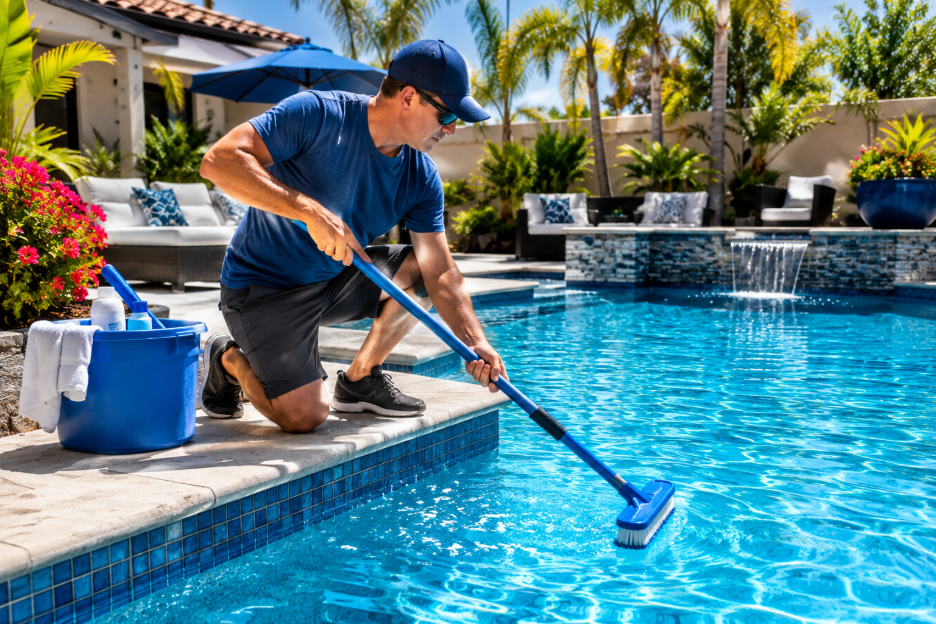
Your filtration system plays a critical role in maintaining water clarity. Even properly balanced water can develop issues if filtration equipment is not functioning effectively.
Filters continuously remove contaminants that would otherwise accumulate in the pool. Over time, however, filters become clogged and less efficient.
To maintain optimal performance:
- Clean cartridge filters regularly
- Backwash sand and DE filters when needed
- Inspect pump operation
- Check for leaks or damaged components
- Maintain proper water levels
- Replace worn equipment when necessary
A neglected filter can significantly reduce water quality and create conditions that encourage algae growth.
Modern pool equipment offers several advantages for homeowners in San Diego. High-efficiency pumps, automated controllers, and advanced filtration systems can improve consistency while reducing maintenance demands.
Routine equipment inspections help identify small problems before they affect water quality and lead to costly repairs.
Develop a Consistent Preventive Maintenance Plan
The most successful pool owners focus on prevention rather than treatment. A structured maintenance schedule helps keep water healthy and minimizes the likelihood of unexpected issues.
A practical weekly routine may include:
- Testing water chemistry
- Emptying skimmer baskets
- Brushing pool surfaces
- Vacuuming debris
- Inspecting equipment
- Monitoring water levels
Monthly maintenance can include more detailed equipment inspections and filter cleaning.
Professional pool service can also provide added protection. Experienced technicians understand how Southern California weather conditions affect pool chemistry and can identify potential issues before they become visible.
For busy homeowners, routine professional maintenance often provides peace of mind while helping protect the long-term investment in their pool.
Keeping water crystal clear requires consistency, but the effort pays off in lower maintenance costs, improved swimmer comfort, and a more enjoyable backyard experience. By maintaining balanced chemistry, promoting circulation, cleaning regularly, optimizing filtration, and following a preventive care schedule, homeowners can enjoy beautiful, algae-free water throughout every season.
Schedule Your Free Pool Design Consultation Today
Dreaming of a backyard oasis? Majestic Pools & Spas—San Diego’s award-winning custom pool designer and builder—is here to make it a reality. Schedule your free, no-obligation consultation today and take advantage of our limited-time offer: a complimentary custom pool design when you choose to build with us. Start your journey to a stunning new pool by booking online
Majestic Pools & Spas (Visit our showroom)
- Address: 9951 Businesspark Ave Suite A, San Diego, CA 92131
- Phone: +1 858-790-9919
- website: https://www.majesticpools.net/

