

A beautiful backyard pool can quickly become the centerpiece of a Southern California home. It offers a place to cool down, exercise, entertain friends, or simply relax after a long day. But sparkling water does not always mean the water is properly balanced. Changes in chemistry can happen long before there are obvious signs of a problem.
Regular testing gives pool owners a clearer picture of what is happening beneath the surface. Chlorine levels, pH, alkalinity, calcium hardness, and other factors all influence how safe and comfortable a swimming pool is to use. When these levels move outside their ideal ranges, the effects can show up as cloudy water, irritated skin, algae growth, staining, or damage to expensive equipment.
In San Diego and throughout Southern California, pools also face environmental conditions that can affect water chemistry. Strong sunlight, warm temperatures, evaporation, coastal influences, landscaping, and frequent swimming can all change the balance of the water.
Testing consistently makes it easier to catch these changes early. Instead of reacting after the water turns green or equipment begins showing signs of damage, homeowners can make smaller adjustments that help keep their pools clean, comfortable, and ready to enjoy.

Clear Water Does Not Always Mean Balanced Water
It is easy to judge a swimming pool by appearance. If the water looks blue and clear, many homeowners assume everything must be working properly. Unfortunately, water chemistry problems are not always visible.
A pool can look perfectly clean while having an incorrect pH, insufficient sanitizer, or unbalanced alkalinity. These conditions may gradually create problems without immediately changing the appearance of the water.
For example, chlorine plays an important role in controlling bacteria and other contaminants introduced by swimmers, debris, and the surrounding environment. If sanitizer levels fall too low, microorganisms may multiply even before the water begins looking cloudy.
The same applies to pH. Water with an improper pH can affect swimmer comfort and reduce the effectiveness of chlorine. Over time, severely unbalanced water may also contribute to scaling or corrosion.
Testing removes the guesswork.
Instead of relying only on how the pool looks or smells, homeowners receive measurable information about its condition. Those results make it easier to determine whether adjustments are actually needed.
This is particularly useful during Southern California’s warmer months, when pools may receive more frequent use. More swimmers generally mean more sunscreen, body oils, perspiration, dirt, and other organic materials entering the water.
A pool that looked perfect yesterday may need attention sooner than expected.
San Diego’s Climate Can Change Pool Chemistry Quickly
San Diego is known for its mild weather and abundant sunshine, which make backyard pools enjoyable for much of the year. Those same conditions, however, can influence how quickly pool chemistry changes.
Sunlight is one of the biggest factors. Ultraviolet exposure can break down available chlorine, especially when stabilizer levels are not properly maintained. During long stretches of bright Southern California weather, sanitizer may disappear faster than homeowners expect.
Heat can also increase water evaporation. When water evaporates, dissolved minerals remain behind. Over time, this can contribute to higher concentrations of calcium and other substances.
San Diego County also has areas where hard water can be a concern. If calcium levels become excessive or the overall water balance shifts, mineral deposits may begin appearing on tile, surfaces, plumbing, or equipment.
Environmental debris creates another challenge.
Leaves, dust, pollen, insects, grass clippings, and soil can enter an uncovered pool. Coastal properties may experience different environmental exposure than inland homes, while windy or dry conditions can carry additional debris into backyard pools.
Even occasional rain can change water conditions by introducing contaminants and diluting existing chemical levels.
Because these factors constantly interact, there is no single chemical adjustment that keeps a pool balanced forever. Regular monitoring helps homeowners respond to current conditions rather than relying on assumptions based on what worked several weeks earlier.
Proper Chemistry Helps Protect Swimmers
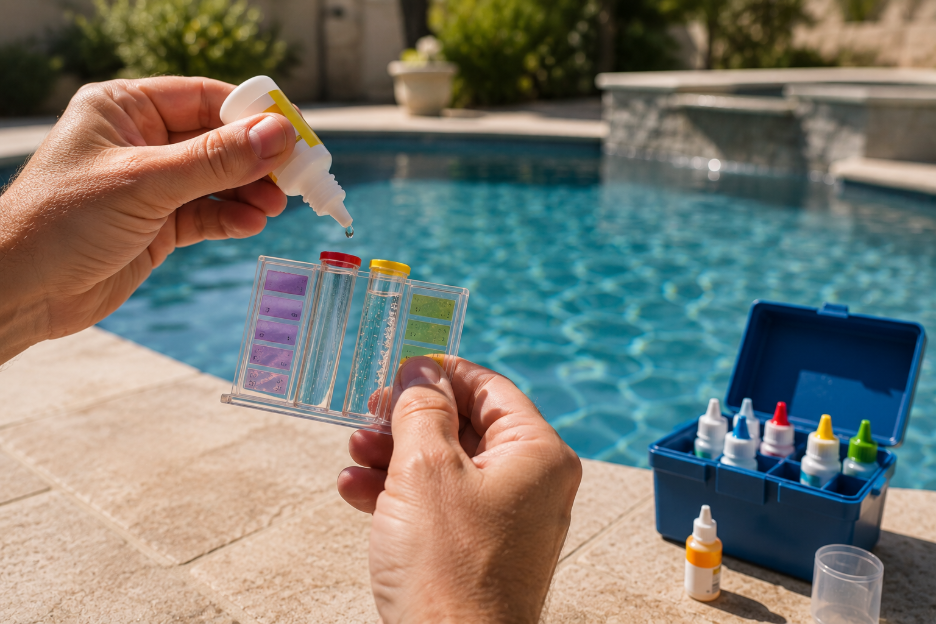
A swimming pool should feel refreshed, not leave swimmers with burning eyes, itchy skin, or other discomfort.
When water chemistry is properly managed, swimming is generally more comfortable. When the balance shifts, swimmers may notice irritation that is sometimes incorrectly blamed on having “too much chlorine.”
The actual cause can be more complicated.
Incorrect pH, chloramines, or poorly maintained sanitizer levels can all contribute to unpleasant swimming conditions. A strong chemical smell may also indicate that chlorine is reacting with contaminants rather than simply meaning that too much fresh chlorine was added.
Routine testing allows pool owners to identify these issues more accurately.
Sanitizer levels are especially important because pools are shared environments. Every swimmer introduces organic material into the water, even when they shower beforehand. Sunscreen and skincare products can add to the chemical demand.
Testing becomes particularly valuable before and after heavy pool use.
If you are hosting a backyard gathering in San Diego, for example, checking the water beforehand can help confirm that conditions are appropriate for swimming. Testing again afterward can reveal whether additional treatment is needed following increased swimmer activity.
Homeowners should also pay attention after unusual events such as storms, extended heat, equipment problems, or periods when the pool has received significantly more use than normal.
Consistent monitoring makes it easier to maintain water that feels clean, comfortable, and inviting.
Balanced Water Protects Pool Surfaces and Equipment
Water chemistry affects more than the people swimming in the pool. It also has a direct relationship with the physical pool and its circulation system.
When water becomes overly aggressive, it can contribute to corrosion and deterioration of certain materials. When it becomes scale-forming, mineral deposits may develop surfaces and equipment.
Both situations can become expensive if ignored.
Pool pumps, heaters, filters, plumbing components, finishes, tile, and other features represent a significant investment. Maintaining appropriate water balance can help protect these components from unnecessary stress.
Calcium hardness is one factor that deserves attention. Too little calcium can contribute to aggressive water conditions in certain pools, while excessive levels may increase the likelihood of scale.
Total alkalinity is another important measurement because it helps stabilize pH. When alkalinity is outside the appropriate range, pH may become more difficult to control.
Testing these values provides a broader understanding of the pool rather than focusing only on chlorine.
This is especially important for pools with premium features such as attached spas, water features, heaters, automation systems, or specialized finishes. Protecting these investments starts with maintaining appropriate water conditions.
Preventive care is generally easier than dealing with stained surfaces, clogged components, scale buildup, or premature equipment deterioration.
Regular chemical checks help homeowners identify developing imbalances while corrections may still be relatively simple.
Routine Testing Can Prevent Bigger Maintenance Problems
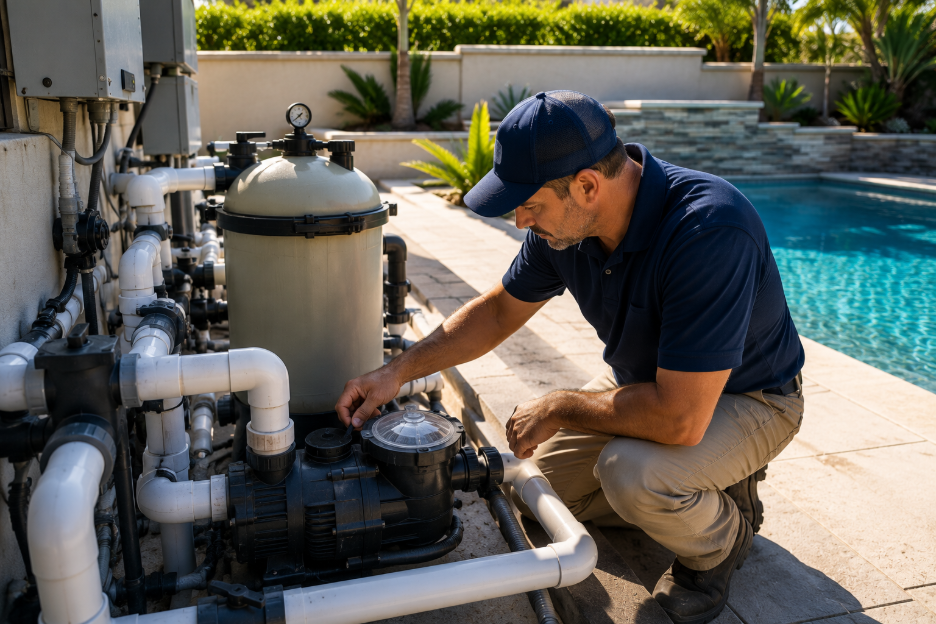
Many frustrating pool problems develop gradually.
Algae is a good example. It may begin growing when sanitizer levels become inadequate; circulation is poor, or water conditions favor its development. By the time walls feel slippery or the water visibly turns green, restoring the pool can require considerably more work.
Routine testing provides an opportunity to catch unfavorable conditions before they become obvious.
The same principle applies to cloudy water.
Cloudiness can result from several causes, including poor filtration, improper chemical balance, contaminants, or inadequate sanitizer. Simply adding chemicals without understanding the underlying issue can waste time and potentially make the situation more difficult to diagnose.
Testing creates a more informed starting point.
Instead of guessing, homeowners can use current readings to determine what needs attention. This may help reduce unnecessary chemical use because treatments can be based on actual conditions rather than assumptions.
Consistency also makes trends easier to recognize.
If pH repeatedly rises shortly after adjustment, for example, that pattern may indicate that another aspect of water balance or pool operation needs attention. If sanitizer repeatedly disappears faster than expected, sunlight, stabilizer levels, swimmer load, or organic contamination could be contributing factors.
A single reading provides a snapshot. Regular readings provide a history.
That history can be especially useful for professional pool technicians who are troubleshooting recurring problems. Knowing how chemistry has changed over time can help identify patterns that might otherwise be missed.
Make Water Testing Part of Your Pool Care Routine
Testing works best when it becomes a normal part of pool ownership rather than something done only after a problem appears.
How often a pool should be tested depends on factors such as weather, swimmer load, pool type, sanitation system, and recent chemical adjustments. Frequently changing measurements, including sanitizer and pH, generally need closer monitoring than parameters that change more gradually.
Homeowners can use test strips, liquid reagent kits, digital testing equipment, or professional water analysis. Each method has advantages, but accuracy depends on using the testing method correctly and interpreting the results properly.
It is also important to look at water chemistry as a connected system.
Adding one chemical can influence another measurement. Adjusting pH without considering alkalinity, for example, may lead to repeated fluctuations. Treating every number independently can make water management more complicated than necessary.
Professional pool service can be helpful when readings are difficult to stabilize or when homeowners are unsure how to interpret their results. An experienced technician can evaluate chemistry alongside circulation, filtration, equipment performance, and the physical condition of the pool.
For homeowners across San Diego and Southern California, a consistent maintenance routine can make pool ownership far more enjoyable. Regular testing helps reveal small changes early, supports comfortable swimming conditions, protects surfaces and equipment, and reduces the likelihood of unexpected water problems.
A healthy-looking pool should be more than visually appealing. It should also be properly balanced behind the scenes. With routine testing and thoughtful maintenance, homeowners can spend less time reacting to problems and more time enjoying clear, inviting water throughout Southern California’s long swimming season.
Schedule Your Free Pool Design Consultation Today
Dreaming of a backyard oasis? Majestic Pools & Spas—San Diego’s award-winning custom pool designer and builder—is here to make it a reality. Schedule your free, no-obligation consultation today and take advantage of our limited-time offer: a complimentary custom pool design when you choose to build with us. Start your journey to a stunning new pool by booking online
Majestic Pools & Spas (Visit our showroom)
- Address: 9951 Businesspark Ave Suite A, San Diego, CA 92131
- Phone: +1 858-790-9919
- website: https://www.majesticpools.net/

