

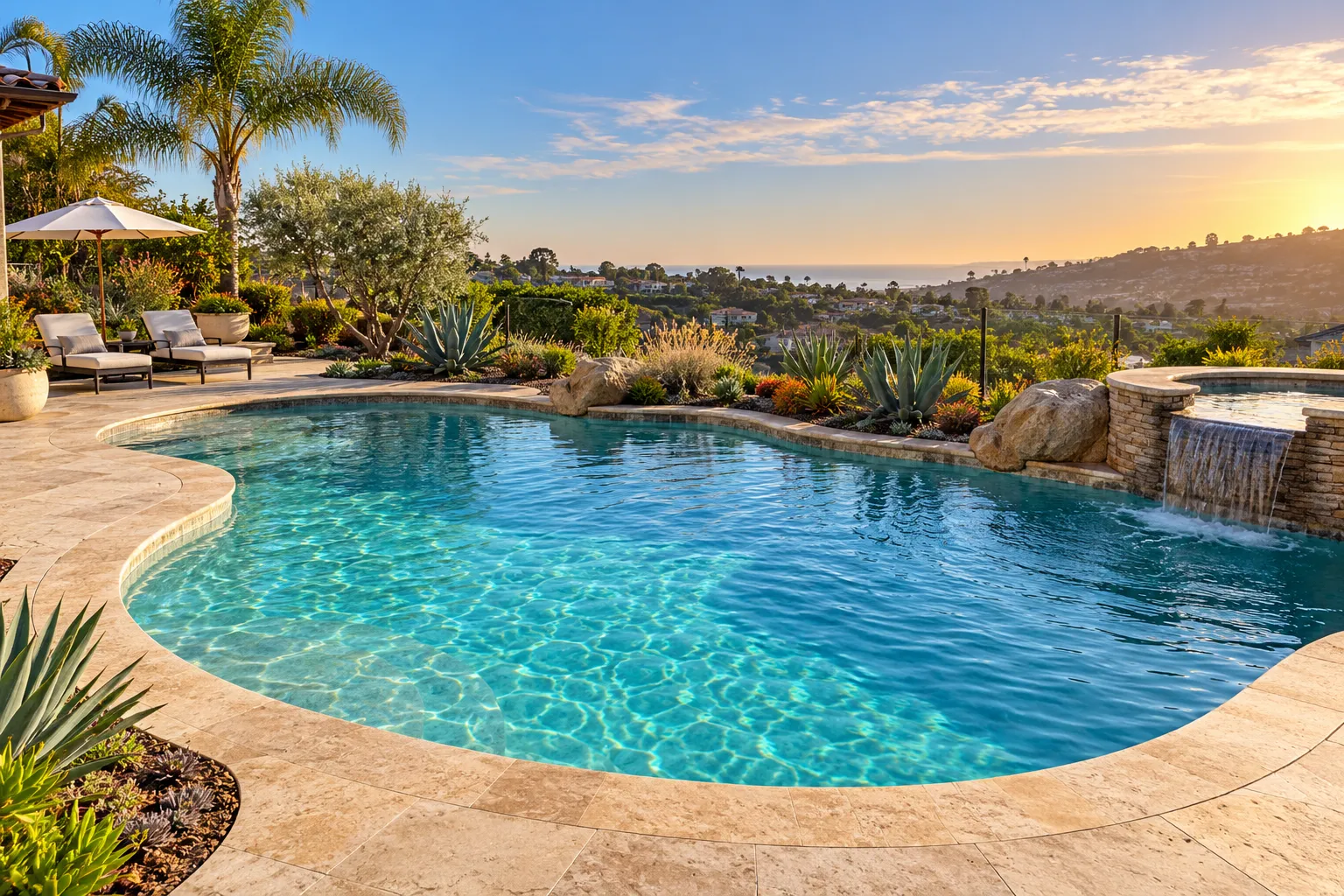
Which Is Better for San Diego Pools, Saltwater or Chlorine?
For most San Diego homeowners building a new pool, a saltwater system is usually the better long-term choice. It makes its own chlorine, keeps levels steady, and feels gentler on your skin and eyes. A traditional chlorine pool costs less at first and might be better if your design uses soft natural stone, lots of exposed metal, or you have a tight budget. Since San Diego has moderately hard water, both systems need regular calcium management.
Majestic Pools & Spas is a licensed California contractor (CSLB 973388) and builds custom pools with both saltwater and traditional chlorine systems. Co-founders Rob Romero and Russ Palser each have over 40 years of pool industry experience, and the team is NSPI-certified in water chemistry and hydraulics. This means your pool’s sanitation system is planned from the start with your materials, equipment, and lifestyle in mind. Right now, Majestic Pools offers a free consultation and a complimentary custom 3D design if you decide to build.
Quick Takeaways
- A saltwater pool is still a chlorine pool. A salt cell simply makes the chlorine on site from dissolved salt.
- Saltwater systems cost more to install but usually reduce day-to-day chemical handling, and long-term costs often end up close to a well-run chlorine pool.
- San Diego tap water is moderately hard, so salt cells need routine cleaning to prevent calcium scale.
- Porous natural stone and exposed metals need extra protection around a saltwater pool, especially near the coast.
- The City of San Diego prohibits draining saltwater pool water into storm drains.
- Majestic Pools & Spas builds both system types and includes a complimentary custom 3D design with a signed build.
What Is the Difference Between a Saltwater Pool and a Chlorine Pool?
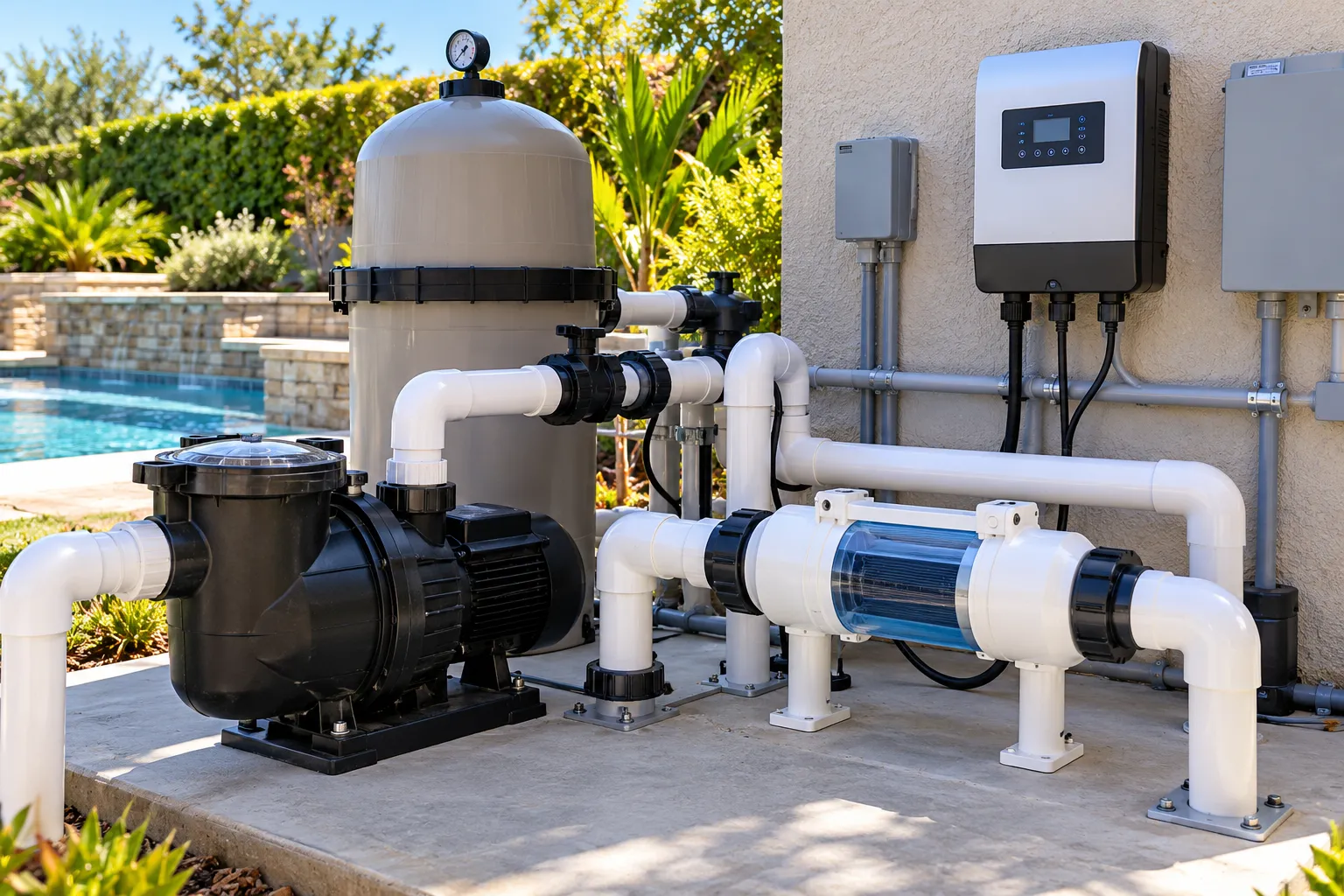
Both saltwater and chlorine pools are sanitized by chlorine. The difference is how the chlorine gets into the water. A traditional pool relies on tablets, granular shock, or liquid chlorine that you add by hand or through a feeder. A saltwater pool uses a salt chlorine generator, which passes slightly salty water across charged plates and converts the salt into chlorine through electrolysis.
This difference is important because it clears up a common misconception. Saltwater pools aren't chemical-free, and you still need to test pH, alkalinity, calcium hardness, stabilizer, and free chlorine. The main change is the routine. Instead of buying, storing, and adding chlorine every week, you just keep the salt level steady and let the generator make sanitizer whenever the pump is on.
The salt concentration is far lower than most people expect. Residential systems typically run around 3,000 to 3,500 parts per million, roughly a tenth of the Pacific Ocean's salinity. Most swimmers can barely taste it.
How Does San Diego's Water Affect a Saltwater Pool?
San Diego's tap water is moderately hard, which means calcium management is the biggest local factor in owning a saltwater pool. City of San Diego water quality data from 2022 shows average calcium hardness of roughly 150 to 165 parts per million at its three main treatment plants. That is manageable, but it adds up quickly in a backyard pool.
Here’s why. Southern California’s dry, sunny weather causes steady evaporation, and every time you add water to the pool, you add more minerals while the evaporated water leaves them behind. Over time, calcium levels go up. Inside a salt cell, water near the plates becomes very alkaline during chlorine production, causing calcium to form white scale on the plates. When a cell gets scaled, it makes less chlorine and wears out faster.
The fix is simple but important:
- Keep calcium hardness in the commonly recommended range of 200 to 400 ppm.
- Inspect the salt cell and clean it when scale appears. Many pool care guides suggest checking it at least every three months.
- Balance pH and alkalinity regularly, since high values worsen scaling.
- Plan for a partial drain and refill when calcium climbs too high.
A well-designed system helps too. If you pick a cell that’s the right size for your pool, it can run at a lower setting, and the plates may last longer.
How Much Does a Saltwater Pool Cost Compared to Chlorine?
A saltwater pool costs more to install but usually costs a bit less to run each month. A chlorine pool is the opposite. Salt chlorine generators usually cost about $1,700 to $2,500 installed, while chemicals for a traditional chlorine pool are about $250 to $300 per year. Over the life of a salt cell, many owners find the total costs are pretty similar.
Upfront Costs
The main added expense for a saltwater pool is the generator itself, which includes the cell and a control board. If you are building a new pool, this cost is folded into your equipment package. You can also convert an existing chlorine pool by adding a generator to the equipment pad.
Ongoing Costs
Saltwater pools still use a small amount of pool salt, acid for pH control, and electricity to power the cell. Chlorine pools require a steady supply of tablets, liquid chlorine, or shock, and prices can swing from year to year.
Replacement Costs
The salt cell is the main recurring cost. With good care, cells usually last three to seven years, and replacements often cost a few hundred dollars up to about $1,500, depending on the model. If your cell lasts longer than expected, your yearly cost goes down.
Which Pool Type Requires Less Maintenance?
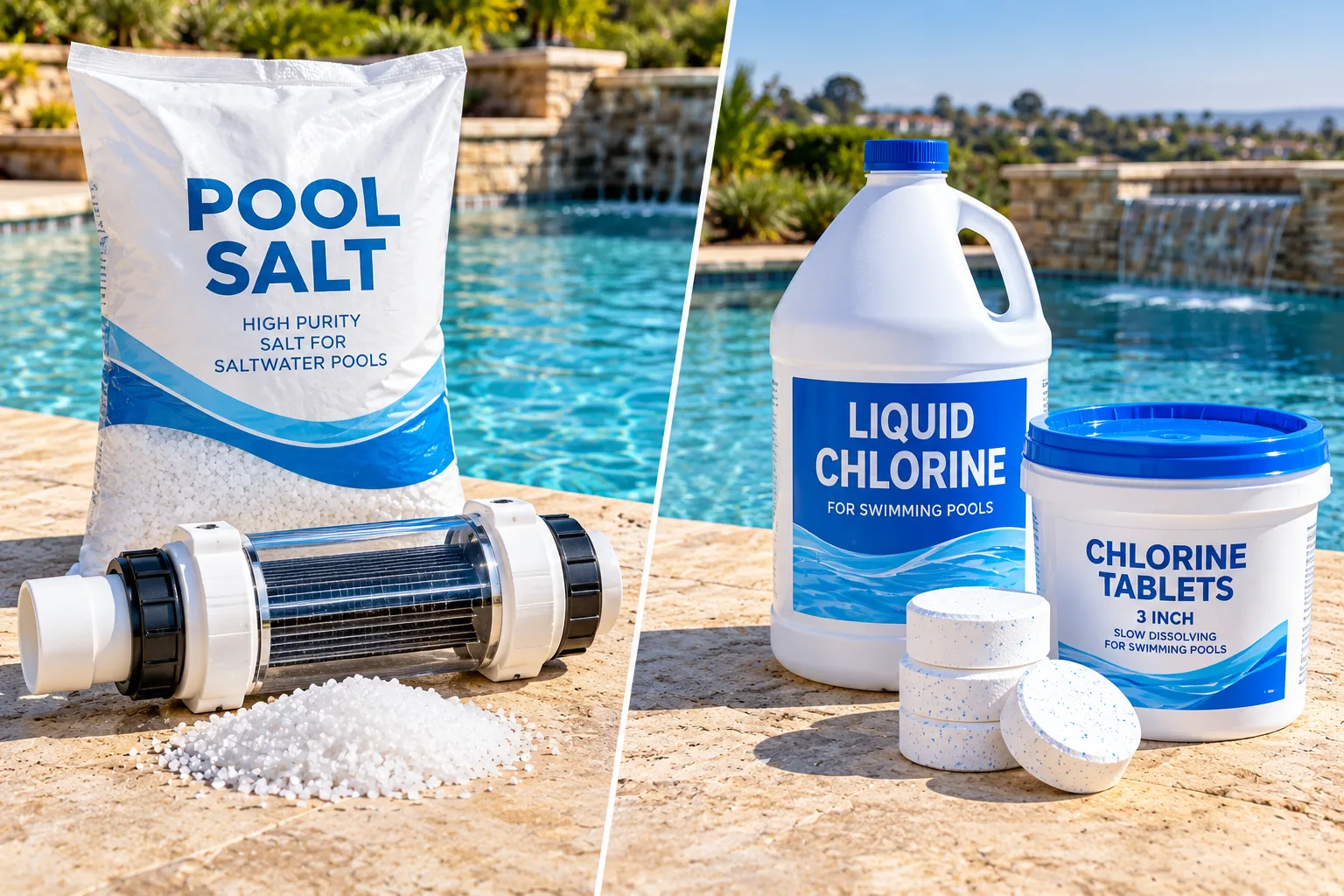
A saltwater pool usually needs less hands-on maintenance each week because the generator makes chlorine automatically, even when you’re away. You no longer have to haul, store, or measure chlorine products. Still, saltwater pools aren’t maintenance-free. You need to test the water, adjust pH (which often goes up in salt pools), and clean the cell from time to time.
For busy San Diego families, the biggest benefit is consistency. In a manually dosed pool, chlorine levels spike after you add it and then drop, which can cause cloudy water or algae if you miss a week. A salt system makes a bit of chlorine every day the pump runs, so the water stays more stable during hot summers and busy weekends.
A traditional chlorine pool can be the lower effort option in one specific case. If you already use a professional weekly pool service that handles all chemicals, the convenience advantage of salt shrinks, and you avoid cell cleaning and replacement altogether.
Will Saltwater Damage Pool Surfaces, Stone or Equipment?
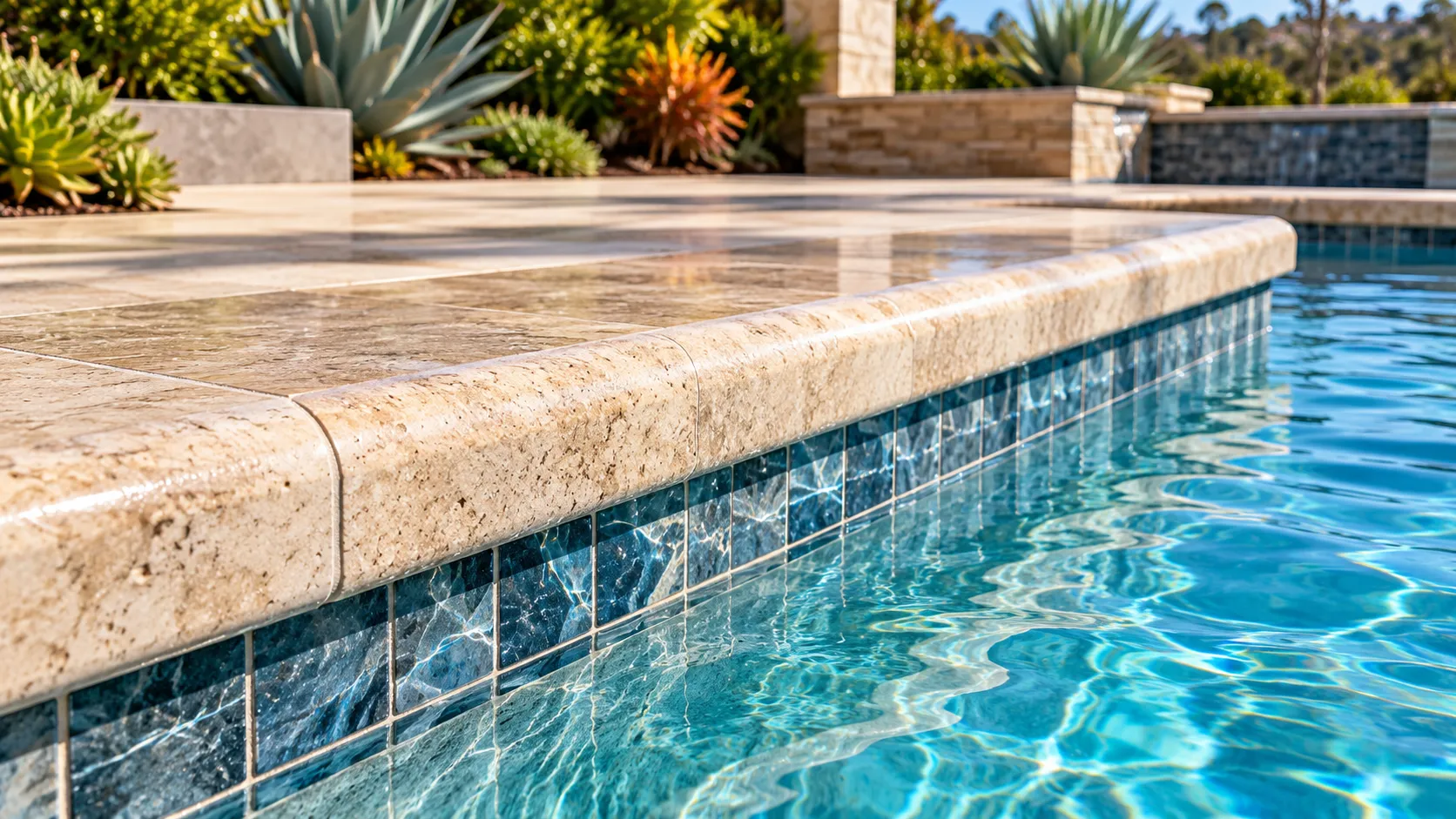
Saltwater can wear out some materials faster, especially soft or porous natural stone and some metals, but a good design can greatly lower that risk. The main issue isn’t the pool water itself, but salty splash-out that dries on nearby surfaces, leaving salt crystals that slowly damage stone and metal.
For San Diego homes, this deserves extra attention near the coast, where salt air already challenges outdoor materials. Smart choices include:
- Select dense, salt-tolerant coping and decking materials, and seal natural stone regularly.
- Choose heaters, ladders, handrails, light fixtures, and cleaners rated for saltwater use.
- Rinse splash zones occasionally, especially around stone and metal features.
Remember that even traditional chlorine pools accumulate some salt over time as chlorine breaks down, so material choices matter for both systems. The difference is one of degree.
Which Feels Better to Swim In?
Many swimmers say saltwater pools feel softer and smoother, with less of the strong chlorine smell and less eye irritation than traditional pools. This comfort usually comes from more stable chlorine levels, not the salt itself. When chlorine is made on demand, the water is less likely to swing between too much and too little.
Families with young kids, frequent swimmers, and people who spend a lot of time in a spa usually notice the difference most. Still, a well-balanced chlorine pool can also feel very comfortable. Most of the strong pool smell comes from chloramines, which build up when sanitizer levels are too low, not too high.
What Are San Diego's Rules for Draining a Saltwater Pool?
The City of San Diego prohibits discharging saltwater pool water into storm drains, curb gutters, or any part of the city storm drain system. Saltwater pools are typically drained to the sanitary sewer through a legal sewer connection instead. Chlorinated water from a traditional pool may reach storm drains only after the chlorine has fully dissipated and other conditions are met.
It’s good to know this before you build, since hard water often means you’ll need to drain the pool sometimes to reduce calcium. San Diego County also says pool owners are responsible for their contractors’ actions, so make sure anyone who services or drains your pool follows local stormwater rules. Adding an easy-to-reach sewer cleanout during construction can make draining much easier later on.
Which Option Is Right for Your Home?
The best choice depends on your materials, budget, and how involved you want to be. Saltwater works well for most new custom pools in San Diego, while chlorine may fit some designs and budgets better. Use this quick guide to help you get started.
Why Choose Majestic Pools for a Saltwater or Chlorine Pool in San Diego?
Majestic Pools & Spas builds custom concrete pools with both saltwater and traditional chlorine systems, so your recommendation is based on your backyard, not just one product. The company specializes in saltwater pools and has built hundreds of custom pools for San Diego homeowners since 2012.
A few things stand out for homeowners making this choice. Co-founders Rob Romero and Russ Palser are involved from start to finish, and the team is NSPI-certified in water chemistry, hydraulics, and plumbing. Majestic Pools is BBB accredited and belongs to the Pool & Hot Tub Alliance, the California Pool & Spa Association, and the National Plaster Council, which helps because water chemistry affects plaster finishes.
Every project starts with a free consultation and a 3D rendering that shows your layout, materials, water features, and lighting before any digging begins. Majestic Pools also handles San Diego County permits, offers financing through partner lenders, and works with its sister company, Majestic Landscapes, for decking, patios, and landscaping. Right now, there’s a limited-time offer for a complimentary custom design if you choose to build.
Frequently Asked Questions
Can I convert my existing chlorine pool to saltwater?
Yes, most existing chlorine pools can be converted by installing a salt chlorine generator on the equipment pad and adding pool salt to reach the recommended level. Before converting, check that your heater, metal fixtures, coping, and decking can tolerate salt. A conversion often fits naturally into a pool remodel, when equipment and surfaces are already being upgraded.
Is a saltwater pool safe for kids and pets?
Saltwater pools are sanitized by chlorine just like traditional pools, so they are as safe as any properly balanced pool. The salt level is about a tenth of ocean salinity. As with any pool, supervise children closely, keep pets from drinking large amounts of pool water, and maintain proper chemistry so sanitizer levels stay effective without becoming excessive.
How long does a salt cell last in San Diego?
Salt cells typically last about three to seven years. In San Diego, hard water can shorten that range if calcium scale builds up on the plates. Regular inspection, cleaning when scale appears, balanced pH, and controlling calcium hardness are the best ways to reach the longer end of that lifespan.
Does a saltwater pool work with a heated spa?
Yes, saltwater systems are commonly used with attached spas that share the same water and equipment. Because spas run warmer and are often used for long soaks, many owners appreciate the gentler feel. Make sure the heater and any spa jets or fittings are rated for saltwater, and keep pH balanced since warm water speeds up scaling.
Do saltwater pools cost more to build in San Diego?
A saltwater pool typically adds the cost of a salt chlorine generator, commonly around $1,700 to $2,500, to the equipment package. Material choices such as salt-tolerant coping or sealed stone may also affect the budget. Because every custom pool differs, the most accurate number comes from a site-specific design and proposal.
Ready to Design Your San Diego Saltwater Pool?
Choosing between a saltwater or chlorine pool in San Diego is easier when your sanitation system is planned together with your materials, equipment, and backyard layout. Majestic Pools & Spas builds both types, and their certified team can help you compare comfort, maintenance, and long-term costs for your home. Start with a free consultation, preview your pool in a 3D rendering before construction, and take advantage of the current offer for a complimentary custom design if you decide to build.
Schedule Your Free Pool Design Consultation Today
Dreaming of a backyard oasis? Majestic Pools & Spas—San Diego’s award-winning custom pool designer and builder—is here to make it a reality. Schedule your free, no-obligation consultation today and take advantage of our limited-time offer: a complimentary custom pool design when you choose to build with us. Start your journey to a stunning new pool by booking online.
Majestic Pools & Spas (Visit Our Showroom)
- Address: 9951 Businesspark Ave Suite A, San Diego, CA 92131
- Phone: +1 858-790-9919
- Website: https://www.majesticpools.net/

