

How Do You Drain a Pool Safely and Avoid Costly Mistakes?
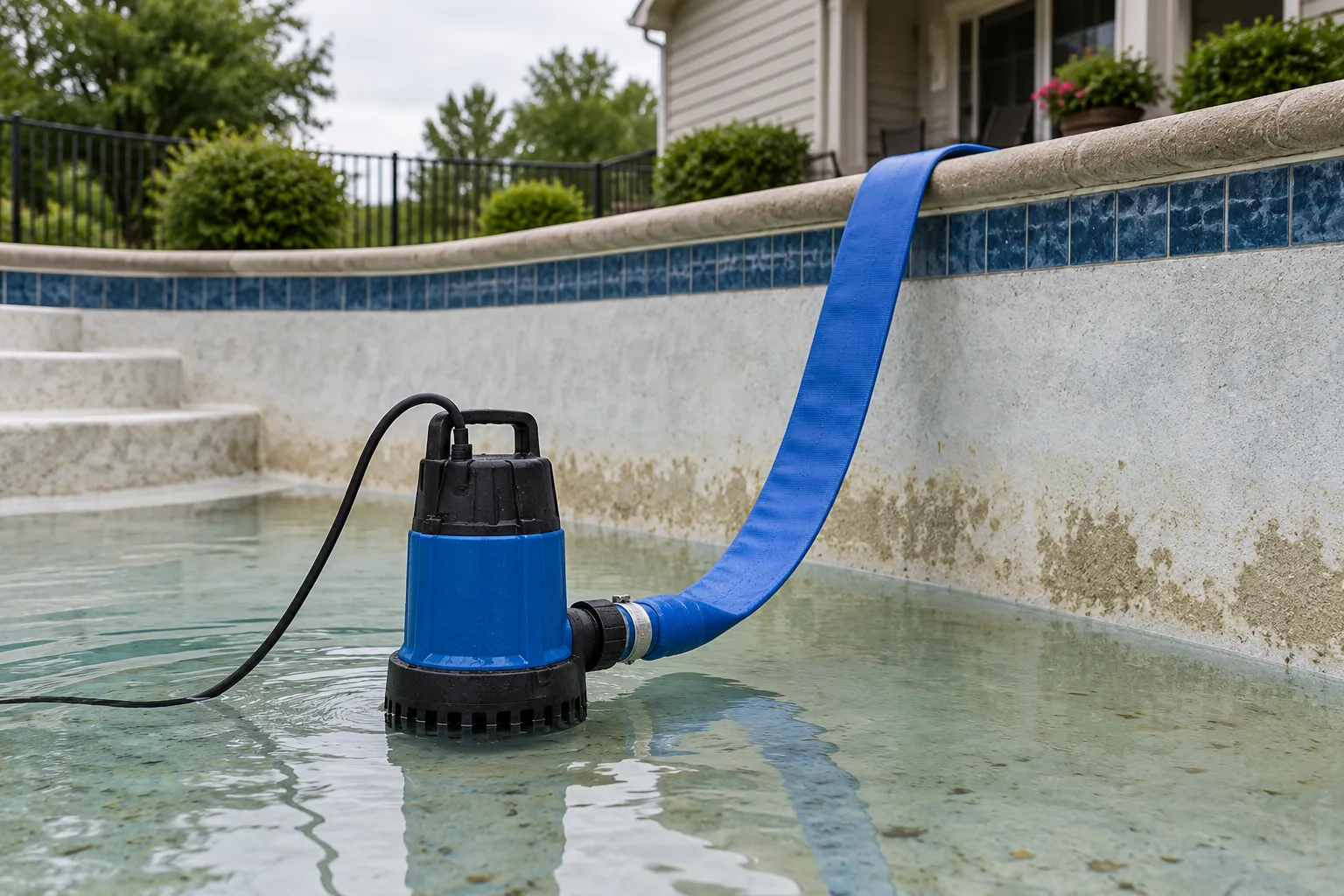
To drain a pool safely, first confirm the pool truly needs it, then pick a cool, dry stretch of weather with no rain in the forecast. Shut off the pool equipment, let chlorine drop to zero, and pump the water slowly into a legal sewer cleanout. Open the hydrostatic relief valve once the pool is mostly empty, finish your work quickly, and start refilling the same day.
How This Connects to Majestic Pools & Spas
Majestic Pools & Spas is a licensed pool contracting company based in San Diego that provides custom concrete pools and spas, giving it direct experience in the problems that can arise when a drain fails and in the importance of a well-constructed pool shell for long-term health. The company does not promote routine pool draining as a separate service. Instead, if your drainage is included in a larger project like a new pool or a complete backyard redesign, the company will offer a free consultation and, for a limited time, a complimentary custom design if you decide to move forward with construction. Information about current offers can always be found at majesticpools.net.
Quick Takeaways
- Most pools can be addressed by draining only part of the water when dissolved solids, calcium, or stabilizer levels are high, whereas emptying the pool altogether is much riskier.
- In San Diego, you may not discharge pool water, filter backwash, or plaster debris onto the street or into the storm drain, and violations can cost $10,000 per day.
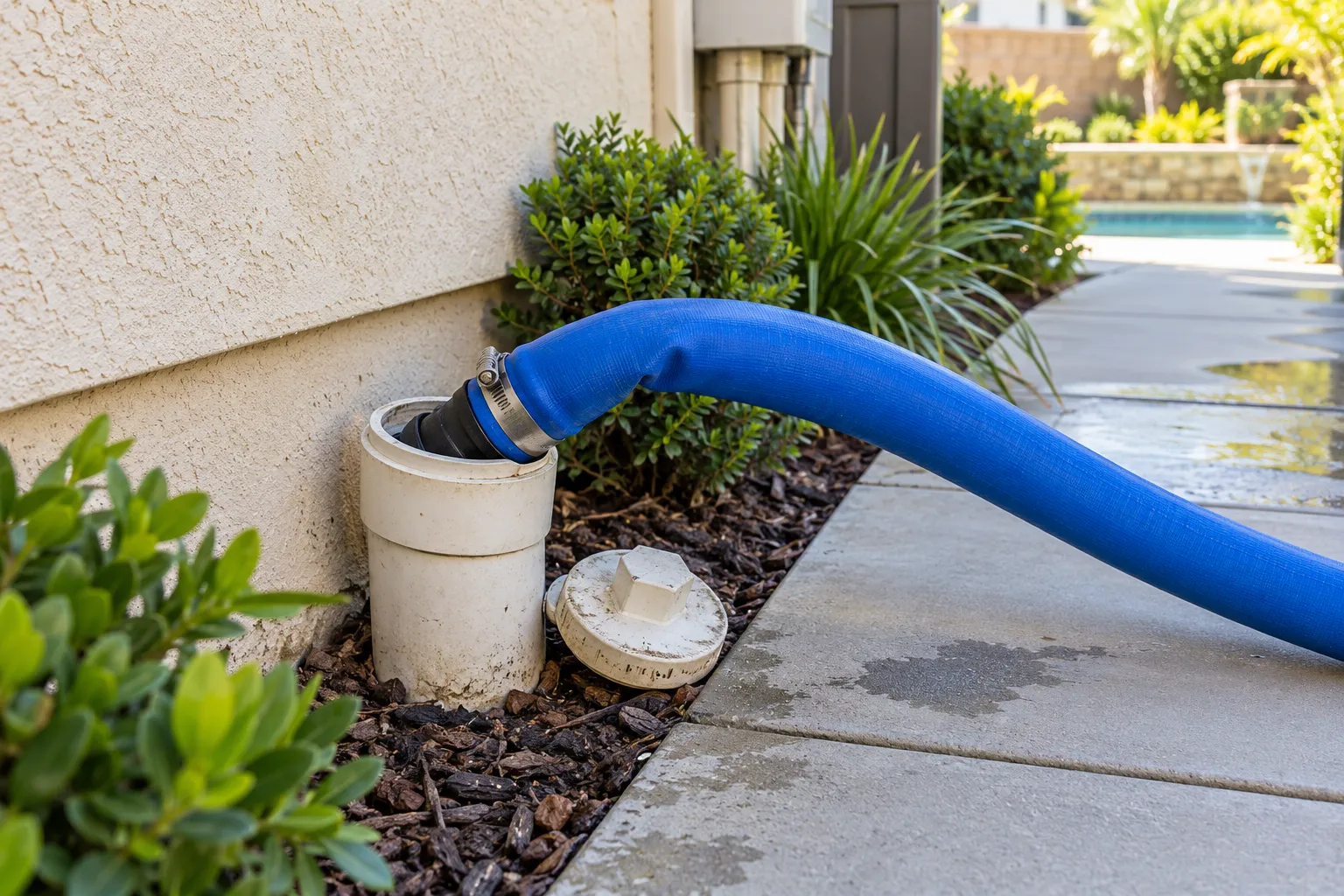
- The safest option for homeowners in San Diego is generally to use the sanitary sewer via a cleanout on the property, although rules vary by city and water district.
- An underground pool can crack or even be lifted out of the ground if groundwater pushes against it, especially after rainfall.
- Plaster must not be left to dry in the hot sun, so you should plan the job, get your team in place, and refill it as soon as possible.
Do You Actually Need to Drain Your Pool?
Most pools only need draining when water chemistry can no longer be corrected with chemicals or when the shell itself needs work. Common triggers include total dissolved solids above roughly 2,500 ppm, calcium hardness approaching 800 ppm, stabilizer levels so high that chlorine stops working, or planned replastering, tile, and acid wash projects.
Algae alone is not a valid reason to drain the pool, since a green pool can almost always be restored through shocking, brushing, and filtration; draining only raises the risk to the plaster, so before you remove a single gallon, check the water and look at the actual figures.
When a Partial Drain Is Enough
If your TDS, calcium, or cyanuric acid levels are only moderately high, you can reduce the water by about one third, then top off with fresh water to bring the levels back into an acceptable range. Partial dilution is safer because the shell never loses water weight, which keeps it in place.
When a Full Drain Makes Sense
A complete drain is generally only carried out when resurfacing is being done, when an acid wash is required on heavily stained concrete, when repairs to the tile or the plumbing underneath the waterline are needed, or when a vinyl liner is being replaced. Plan draining around the repair schedule so the pool stays empty for as short a time as possible.
Where Can You Legally Drain Pool Water in San Diego?
In the City of San Diego, the preferred option is the sanitary sewer through an onsite sink or a lateral sewer cleanout. Pool water, spa water, filter backwash, and construction materials like plaster and cement may not enter the storm drain system, which flows untreated to local creeks, bays, and the ocean.
The City's stormwater regulations are specific: any water directed anywhere other than into the sewer must not contain chlorine, salt, dechlorinating agents, hydrogen peroxide products, algae, or algaecides. Saltwater pools must not be discharged onto the street, into the gutter, or into the storm drain. Penalties under the San Diego Municipal Code can reach $10,000 per day per incident, making it one of the most costly errors a pool owner can make by carelessly directing a hose into the gutter.
Rules Change From One Jurisdiction to the Next
The San Diego County area includes many cities and water districts, and their rules aren't always the same. The Vallecitos Water District, which serves the San Marcos area, prohibits discharging pool water into its sanitary sewer and allows dechlorinated water to be poured into the storm drain only if certain strict conditions are met. Residents in unincorporated parts of the county can contact the County's stormwater hotline at 1-888-846-0800. However, if you live in Carlsbad, Poway, Escondido, or another town, ask your local stormwater program first.
How Do You Drain a Pool Step by Step?
Safe draining follows a simple order: test, plan around the weather, dechlorinate, shut off equipment, pump slowly to the sewer, relieve groundwater pressure, finish the work, and refill. Skipping any of these steps causes most damage and fines.
Rent a submersible pump rather than relying on the pool's circulation pump, which isn't designed to pull water from an emptying pool.
Why Can an Empty Pool Pop Out of the Ground?
An inground pool can lift or crack when groundwater pressure outside the shell exceeds the weight inside it. A full pool weighs enough to stay put, but an empty concrete shell can act like a boat when the surrounding soil is saturated from rain, irrigation, or a high water table.
That is why it is risky to pump thousands of gallons onto the lawn next to the pool, since it allows the soil around the shell to absorb water just as a heavy rainstorm would when the pool is most vulnerable.
The Role of the Hydrostatic Relief Valve
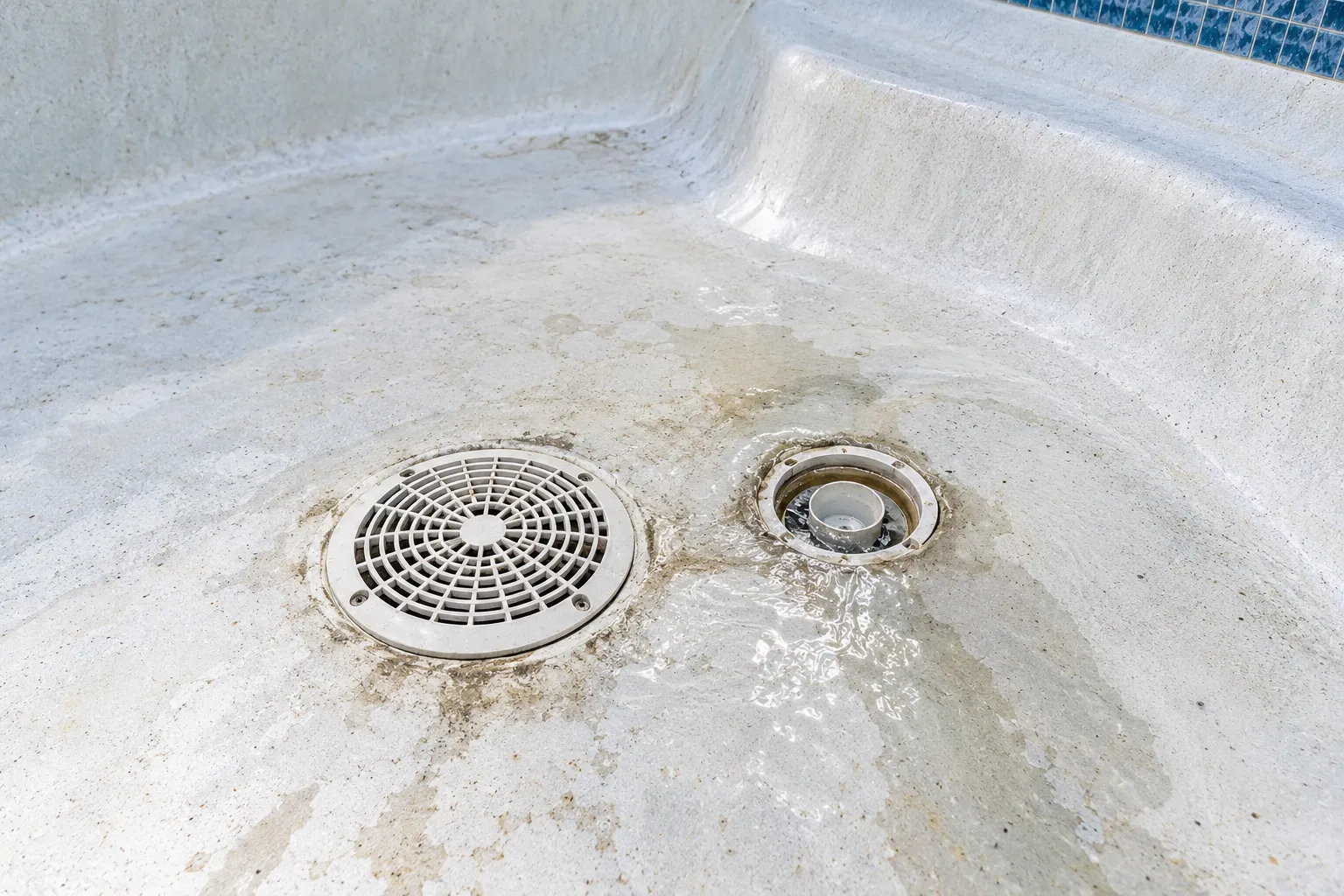
Concrete pools usually have a hydrostatic relief valve in the floor near the main drain. If groundwater pressure increases, the valve lets water flow into the pool instead of forcing the shell upward. It is advised by pool builders to open the valve only after the pool has been mostly drained. The valve is working properly if you notice water bubbling up through the hole.
You cannot be certain that valves will work as intended. Builders have reported cases where valves were never fitted, where valves jammed and closed, and where pools floated even though they had relief openings. If your property sits at the foot of a slope, has a history of drainage issues, or has recently experienced heavy rain, consult a qualified pool contractor before draining.
When Is the Best Time of Year to Drain a Pool?
The best time to drain a pool is during mild, dry weather, ideally a stretch of cool, overcast days with no rain in the forecast. Avoid hot afternoons, when exposed plaster dries out quickly, and avoid the days right after a storm, when saturated soil raises the risk of the shell lifting.
In coastal San Diego, spring or autumn is typically drier than late summer or the wettest weeks of winter; inland areas such as Poway, Ramona, and Valley Center get hotter, so a cooler morning start is especially important. Since plaster is meant to stay wet, if it bakes in direct sunlight, it may craze or crack, turning a simple water change into a job that requires resurfacing.
What Are the Most Common Pool Draining Mistakes?
The most expensive pool draining mistakes are discharging water to the storm drain, draining after heavy rain, leaving the pool empty too long, letting the pump run dry, and refilling without a plan for water balance.
- Avoid directing drainage toward the street, the gutter, or your neighbor's property.
- Do not leave an empty pool unattended overnight unless you have a plan to refill it.
- You should not open the hydrostatic relief valve when the pool is still full.
- Don't ignore loose tiles or damaged coping, because drainage can make the situation worse.
- Remember the HOA, as it may have its own rules about noise, hoses, and working hours.
How Should You Refill and Rebalance After Draining?

Begin refilling as soon as your cleaning or repairs are finished, and keep the hose running until the water reaches the middle of the skimmer opening. Restart the equipment once the skimmer is covered, then balance the water in a steady order rather than adding everything at once.
A common procedure is to test total alkalinity first, then pH, followed by calcium hardness, the stabilizer, and finally chlorine. After replastering, follow the plaster contractor's startup instructions precisely, as fresh plaster requires special brushing and chemistry for the first few weeks. Since San Diego tap water is generally hard, test your fill water before concluding that refilling it will reduce calcium levels.
Looking to Upgrade Instead of Just Drain?
Sometimes a drain reveals bigger issues, like a cracked shell, outdated equipment, or a layout that no longer fits how your family uses the backyard.
Majestic Pools & Spas holds California contractor license 973388 as a C-53 swimming pool contractor and has been licensed since 2012. Co-founders Rob Romero and Russ Palser each bring more than 40 years of pool industry experience and stay involved with every client from design through construction. The company builds custom concrete and gunite pools, infinity edge pools, attached spas, and saltwater systems, and its sister company, Majestic Landscapes, handles patios, fencing, gardens, and water features. As a result, one team brings the whole backyard together.
Majestic also handles the local permitting, provides financing via reputable lenders, and supplies 3D renderings before excavation begins. Although Majestic Pools & Spas does not perform regular pool draining, homeowners considering a change are encouraged to start with a free consultation and take advantage of the current free custom design offer.
Frequently Asked Questions
How long does it take to drain a pool?
Draining an average residential pool with a rented submersible pump usually takes most of a day, depending on pool size, pump capacity, and how quickly your sewer cleanout can accept the flow. A garden hose siphon can take several days, leaving the shell partially empty longer. Add three to five days beforehand for chlorine to dissipate.
Can I leave my pool empty overnight?
It is best to avoid it. An empty pool is exposed to groundwater pressure, sun damage, and debris, and plaster can begin to dry and crack. If an overnight empty period cannot be avoided, keep the hydrostatic relief valve open, keep the area clear of irrigation water, and have refilling scheduled for first thing the next morning.
Should I hire a professional to drain my pool?
For a simple partial drain on a healthy pool, many homeowners handle it themselves with a rented pump. Hire a professional for a full drain, an older pool, a property on a slope, a pool with a high water table, or any drain tied to resurfacing. Expert help costs little compared with repairing a lifted or cracked shell.
Does a saltwater pool need special handling when draining?
Yes. Saltwater can harm plants, soil, and local waterways, so in the City of San Diego it must go to the sanitary sewer and never to the street, gutter, or storm drain. Salt cannot be removed by waiting the way chlorine can, which makes the sewer cleanout the only practical option for most San Diego homeowners.
Ready to Plan Your Next Backyard Project With Majestic Pools & Spas?
Draining a pool safely protects your investment, but some projects call for more than fresh water. If you are thinking about a new custom pool, an attached spa, or a complete backyard makeover, Majestic Pools & Spas handles design, permitting, and construction across San Diego County, with landscaping through Majestic Landscapes.
Schedule Your Free Pool Design Consultation Today
Dreaming of a backyard oasis? Majestic Pools & Spas—San Diego’s award-winning custom pool designer and builder—is here to make it a reality. Schedule your free, no-obligation consultation today and take advantage of our limited-time offer: a complimentary custom pool design when you choose to build with us. Start your journey to a stunning new pool by booking online.
Majestic Pools & Spas (Visit Our Showroom)
- Address: 9951 Businesspark Ave Suite A, San Diego, CA 92131
- Phone: +1 858-790-9919
- Website: https://www.majesticpools.net/

