

How Can San Diego Pool Owners Conserve Water During a Drought?
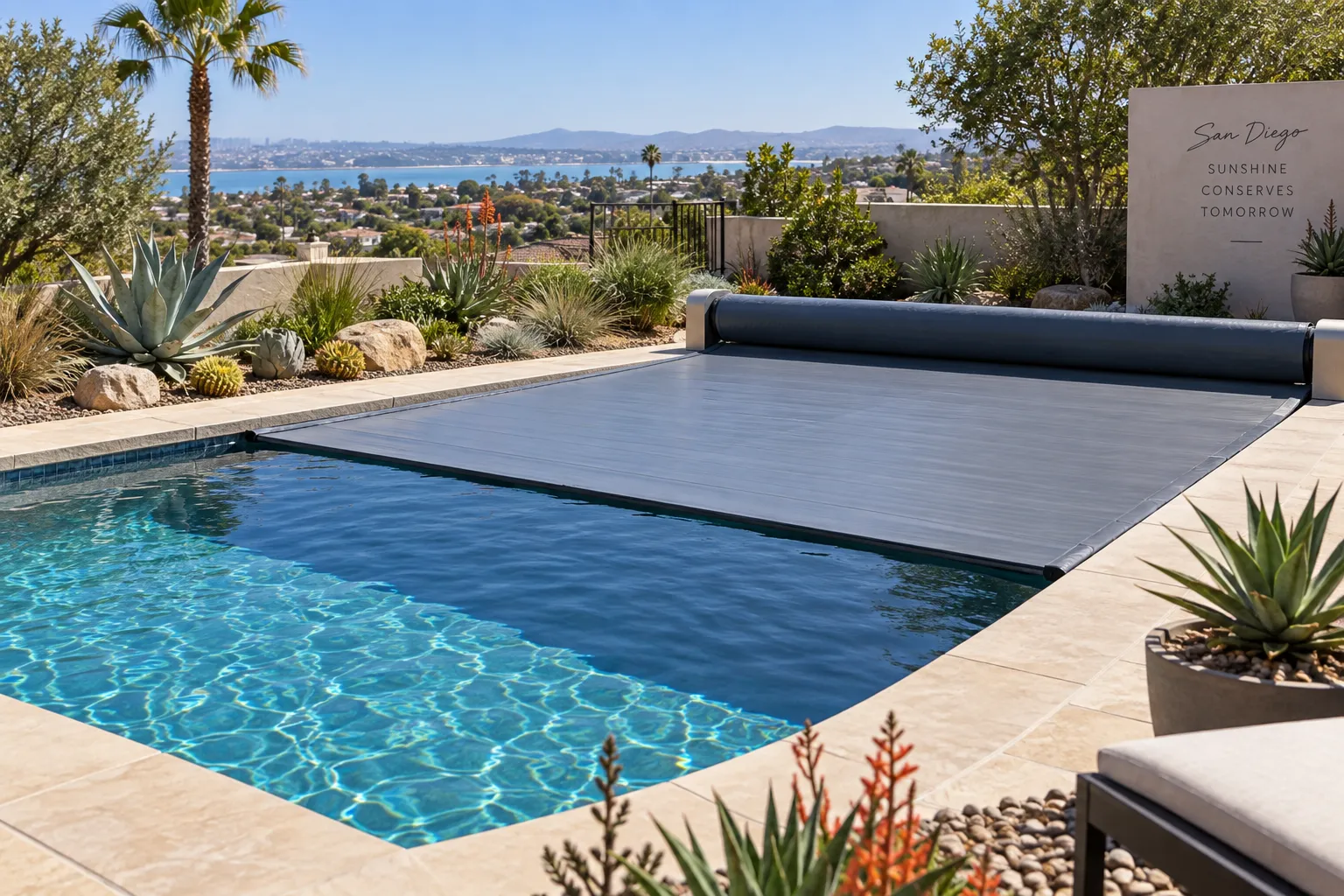
The biggest water-saver for any pool is a cover, which can prevent up to 95% of evaporation, followed by fixing leaks early, running pumps efficiently, and choosing drought-tolerant landscaping around the pool deck. A well-built pool with efficient equipment and smart automation also loses less water over its lifetime than an older, leak-prone one.
How This Relates to Majestic Pools
Majestic Pools & Spas is a licensed custom pool design-and-build company serving San Diego County. While Majestic Pools isn't a pool-service or maintenance company, water-efficient design starts at the build or remodel stage—plumbing layout, filtration, LED lighting, and smart automation are part of its standard construction process, and these choices affect how much water a pool loses over time. Majestic Pools is currently offering a complimentary custom 3D pool design with any new build.
Quick Takeaways
- A pool cover is the single most effective water-saving tool, cutting evaporation by up to 95%.
- An uncovered 500-square-foot pool can lose 12,000–31,000 gallons a year to evaporation alone, more if it's heated.
- San Diego's regional water supply is currently considered well-prepared for 2026, with no mandatory drought restrictions in place as of this writing — but voluntary conservation habits still lower your water bill.
- A simple 24-hour bucket test can tell you whether water loss is evaporation or a leak.
- New pool construction and remodels are a natural point to build in water-efficient equipment and design.
- Majestic Pools is currently offering a complimentary 3D design with a new build.
Why Do Swimming Pools Lose So Much Water?
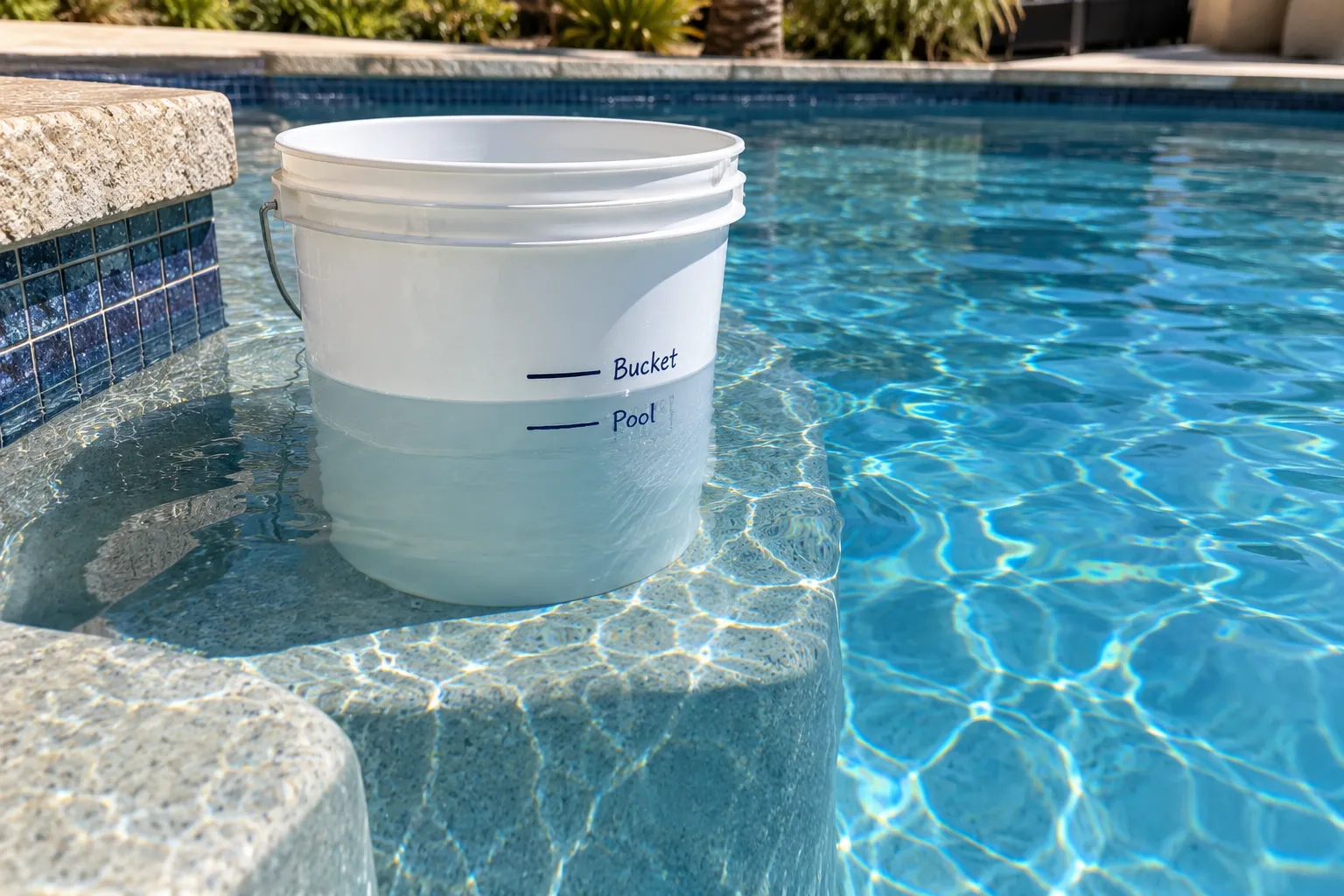
Evaporation is the single biggest source of water loss in residential pools, especially in warm, dry climates like San Diego's, and it's driven by temperature, humidity, and wind. The EPA estimates an uncovered 500-square-foot pool can lose between 12,000 and 31,000 gallons a year to evaporation, with heated pools losing even more.
Splashing, backwashing filters, and, less commonly, structural or plumbing leaks add to that total. Because evaporation scales with surface area and sun/wind exposure, pool shape, orientation, and surrounding landscaping all affect how much water disappears over a season—factors worth discussing at the design stage of a new pool or remodel.
How Much Water Can a Pool Cover Actually Save?
A quality pool cover, used consistently, can prevent up to 95% of evaporation, and covered heated pools can also cut heating costs by roughly 50–70%. Despite this, national data shows only about 15% of pool owners regularly use one.
Source: EPA WaterSense, "Jump Into Pool Water Efficiency"
Solid and hybrid covers offer the biggest water savings and can double as a safety barrier, though they take more effort to remove and replace than a solar cover. Liquid suppressants are the lowest-effort option but offer far smaller savings, so they work best as a supplement rather than a primary strategy.
Is San Diego Currently Under Drought Water Restrictions?
Not as of this writing — the San Diego County Water Authority says the region is well-prepared for water year 2026 and, per its draft 2025 Urban Water Management Plan, projects sufficient supply through 2050 even in multiple dry years. That said, San Diego has moved through mandatory restriction periods before, and the Water Authority continues to promote voluntary conservation as a long-term habit rather than only an emergency response.
Because rules can change with rainfall and reservoir levels, pool owners should check sdcwa.org or their local water district directly before assuming any specific restriction is or isn't in effect.
How Do You Know If It's Evaporation or a Leak?
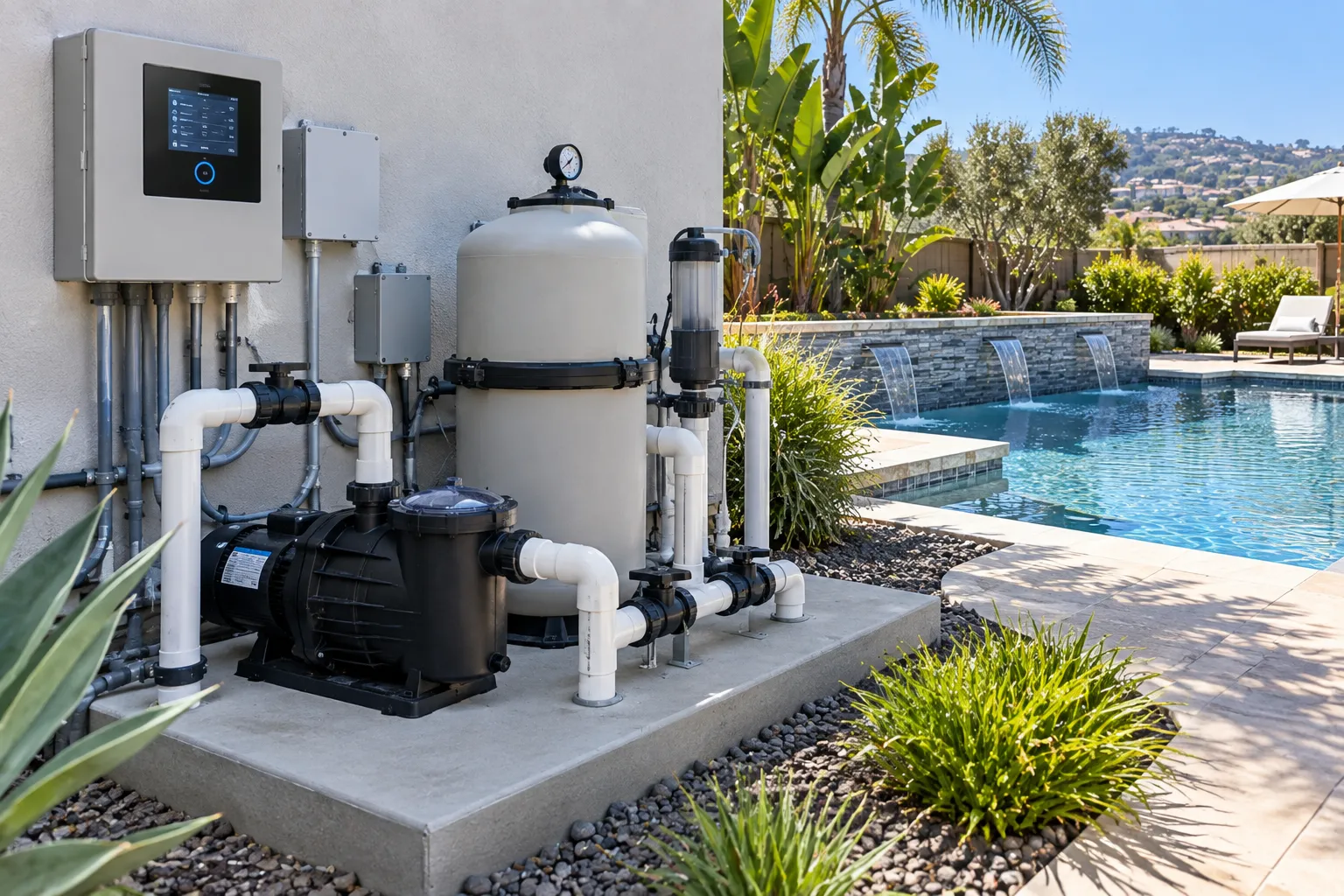
A 24-hour bucket test is the standard way to tell the difference: fill a bucket with pool water to about an inch from the top, set it on a pool step so it's partially submerged, mark the water line inside and outside the bucket, then compare the drop in each after 24 hours with the pump off. If the pool's level drops noticeably more than the bucket's, that difference points to a leak rather than normal evaporation.
Run the test on a still day if possible, since wind and heat affect the bucket and pool similarly and can otherwise skew results. A suspected major leak may need a 48-hour test and, if confirmed, a professional leak detection and repair visit.
What Equipment Choices Help a Pool Use Less Water Long-Term?
Reducing how often a filter needs backwashing is one of the most effective equipment-level water savers, since backwashing sand and DE filters flushes water down the drain every cycle. A cover reduces debris entering the water, which in turn reduces how often the filter needs cleaning and backwashing.
Beyond covers, the equipment and automation chosen during a build or remodel affect water use over the life of the pool:
- Cartridge filters don't require backwashing, unlike sand or DE filters.
- Smart automation lets owners monitor and adjust pump run-time and heating remotely, which helps catch unusual water-level changes early.
- Quality plumbing and plaster work reduce the odds of small leaks developing at seams, skimmers, or return lines over time.
Majestic Pools includes plumbing, filtration, and smart automation in its standard six-step build process for new pools.
Should You Change Your Landscaping Around the Pool During a Drought?
Yes — the plants and hardscape immediately around a pool affect both water use and how much debris and organic matter end up in the water. Swapping thirsty lawn areas near the pool deck for drought-tolerant, low-water landscaping reduces irrigation demand without changing the pool itself.
Because Majestic Pools' sister company, Majestic Landscapes, works on decking, patios, and garden areas around a custom pool, you can plan landscaping and pool design together rather than as separate projects. This matters for water efficiency because irrigation runoff and blowing debris both add to a pool's seasonal maintenance water use.
Is It Worth Remodeling an Older Pool Instead of Just Topping It Off?
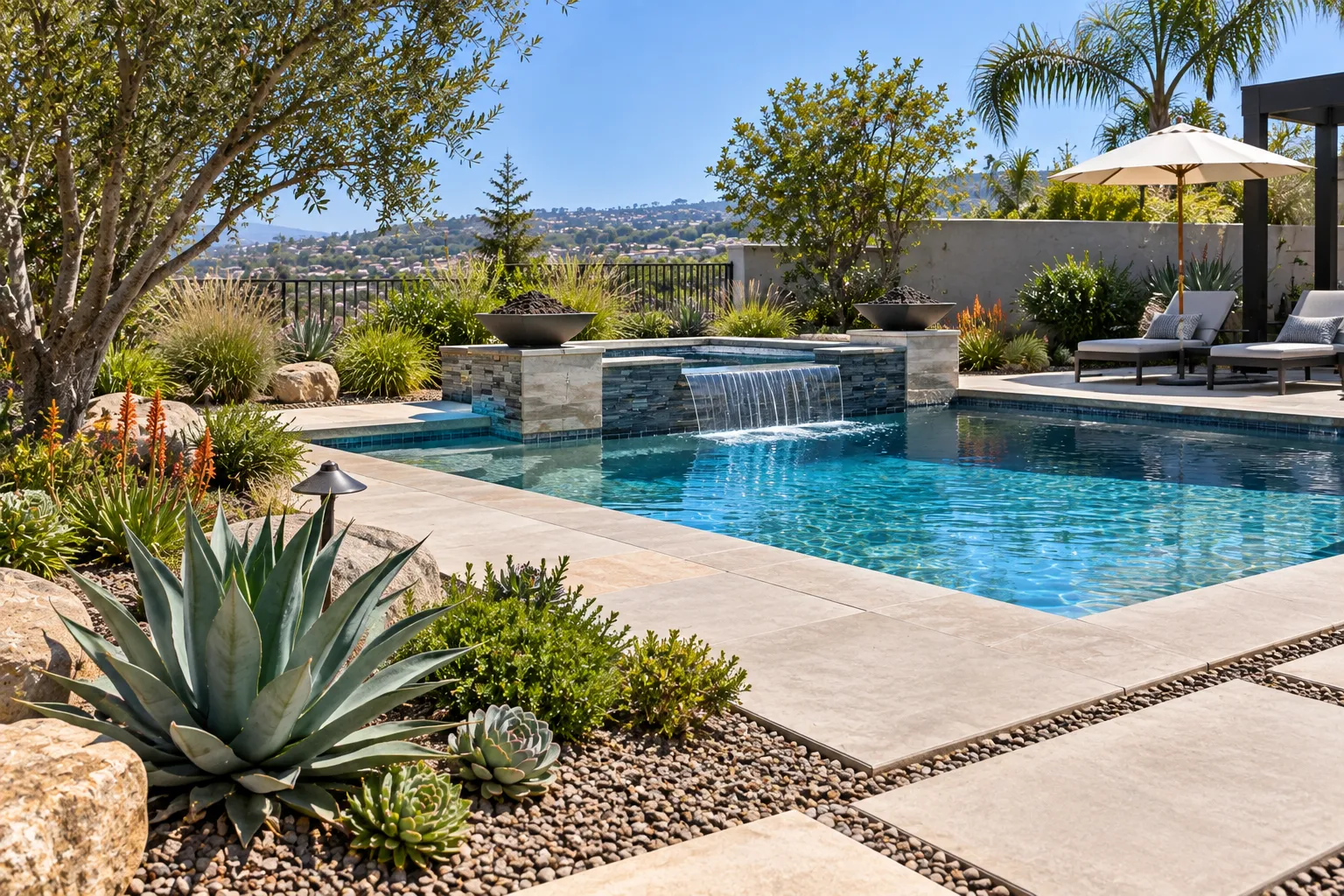
For a pool that's steadily losing water due to age-related cracking, worn plaster, or an outdated single-speed pump, a remodel can pay for itself in reduced water and energy waste over time, even though refilling after a remodel is a one-time water use. A pool with visible plaster cracking, frequent unexplained water loss, or an original pump from more than 10–15 years ago is a reasonable candidate to evaluate.
Why Choose Majestic Pools for Your Next Pool Project?
Majestic Pools & Spas has been building custom pools in San Diego County since 2012, holds an active CSLB C-53 swimming pool contractor license, and manages design, permitting, and construction in-house from initial consultation through completion. While water conservation retrofits aren't a standalone service Majestic Pools advertises, every new build or remodel is an opportunity to choose equipment, plumbing, and automation with long-term water efficiency in mind — and pairing that with Majestic Landscapes' work on the surrounding hardscape covers both sides of the water-use equation.
Right now, Majestic Pools is offering a complimentary custom 3D pool design with any new build, letting homeowners see the exact layout, equipment, and features — including water-saving options worth discussing — before construction begins.
Frequently Asked Questions
How much water does a typical pool lose to evaporation each year?
An uncovered 500-square-foot pool can lose roughly 12,000 to 31,000 gallons a year to evaporation, with heated pools on the higher end of that range. Wind, heat, and humidity all increase the rate, which is part of why covers make such a measurable difference.
Do I need a pool cover if I already have a saltwater pool?
Yes — a saltwater system changes how you sanitize the water, not how quickly it evaporates. A cover still reduces evaporation, heating costs, and debris, whether the pool uses salt or traditional chlorine.
Is there currently a mandatory water restriction on pools in San Diego?
Not according to the San Diego County Water Authority's current outlook for water year 2026, though this can change with rainfall and reservoir conditions. Check with SDCWA or your local water district for the latest status before making assumptions.
How do I know if my water bill increase is from my pool?
A rising water bill combined with a pool that needs topping off more than usual is worth investigating with a bucket test before assuming it's just summer evaporation. If the pool loses noticeably more than a covered bucket over 24 hours, a leak — not evaporation — is the likely cause.
Does Majestic Pools install pool covers or handle leak repairs?
Majestic Pools focuses on custom pool design, construction, and remodeling rather than routine maintenance or cover installation as a standalone service.
Ready to Plan a Water-Smart Pool?
Whether you're building a new pool or remodeling an aging one, the design stage is the easiest time to build in water-efficient equipment, automation, and layout choices that pay off every dry season afterward. Majestic Pools manages that process from initial consultation through construction for San Diego County homeowners, and its current complimentary 3D design offer makes it easy to see exactly what a water-conscious build would look like before committing.
Schedule Your Free Pool Design Consultation Today
Dreaming of a backyard oasis? Majestic Pools & Spas—San Diego’s award-winning custom pool designer and builder—is here to make it a reality. Schedule your free, no-obligation consultation today and take advantage of our limited-time offer: a complimentary custom pool design when you choose to build with us. Start your journey to a stunning new pool by booking online.
Majestic Pools & Spas (Visit Our Showroom)
- Address: 9951 Businesspark Ave Suite A, San Diego, CA 92131
- Phone: +1 858-790-9919
- Website: https://www.majesticpools.net/

