

How to Lower Your Pool’s Energy Costs?
A swimming pool's energy bill is driven mainly by two things: the pump and the heater. Switching to a variable-speed pump, covering the pool when it's not in use, choosing the right heater for your climate, and automating run times can cut pool energy costs by 50% or more combined. Most of these upgrades pay for themselves within one to three years.
How This Relates to Your San Diego Pool
If you're building or remodeling a pool, the equipment decisions you make at the design stage—pump type, heater, plumbing layout, and automation—largely determine your energy bill for the next 10-15 years. Majestic Pools & Spas builds custom pools throughout San Diego County and specs energy-efficient equipment into every project. Right now, Majestic Pools is offering a complimentary custom 3D pool design when you choose to build, so you can see exactly how these energy-saving choices fit your backyard before construction starts.
Quick Takeaways
- A variable-speed pool pump is the single highest-impact upgrade, cutting pump energy use by roughly 65-90% compared to a single-speed pump.
- Pool covers reduce evaporation — the source of about 70% of a pool's heat loss — and can lower heating costs by 50-70%.
- Heat pumps typically cost far less to run than gas heaters in mild coastal climates like San Diego, though gas heats faster for occasional use.
- Smart timers and automation let you run the pump only as long as needed, often 4-8 hours instead of 24.
- LED pool lighting uses a fraction of the electricity of incandescent bulbs and lasts many times longer.
- Building these choices into the pool design from the start — rather than retrofitting later — is usually the most cost-effective path.
What's the Single Best Upgrade to Lower Pool Energy Costs?
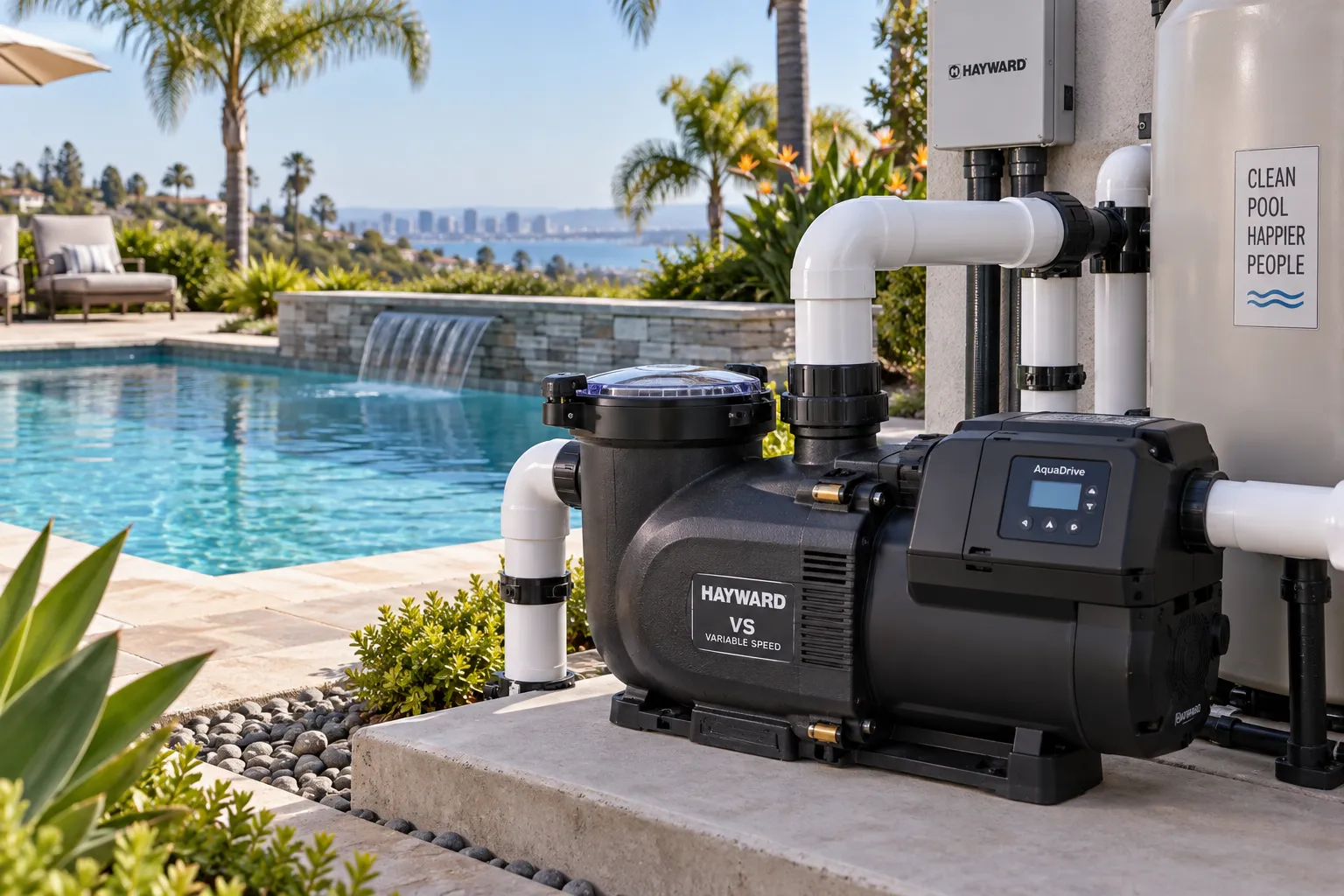
Replacing a single-speed pump with an ENERGY STAR certified variable-speed pump is the most effective single change you can make. Because pump energy use drops sharply as speed decreases, a variable-speed pump can cut pumping costs by roughly 65% to 90%, depending on the model and how it's programmed.
Single-speed pumps run at full power the entire time they're on, even though most tasks — like routine filtration — need only a fraction of that flow. A variable-speed pump lets you run low and slow for filtration, then ramp up only when you're vacuuming or running a cleaning cycle. The U.S. EPA's ENERGY STAR program notes that halving pump speed cuts energy use to roughly one-eighth, since power consumption drops with the cube of speed. Beyond the savings, these pumps also run quieter and put less strain on filters and plumbing, extending the life of the pool's other equipment.
Homeowners often recoup the higher upfront cost of a variable-speed pump within one to two years through lower utility bills, and many utilities offer rebates that shorten that payback further.
How Much Can a Pool Cover Actually Save?
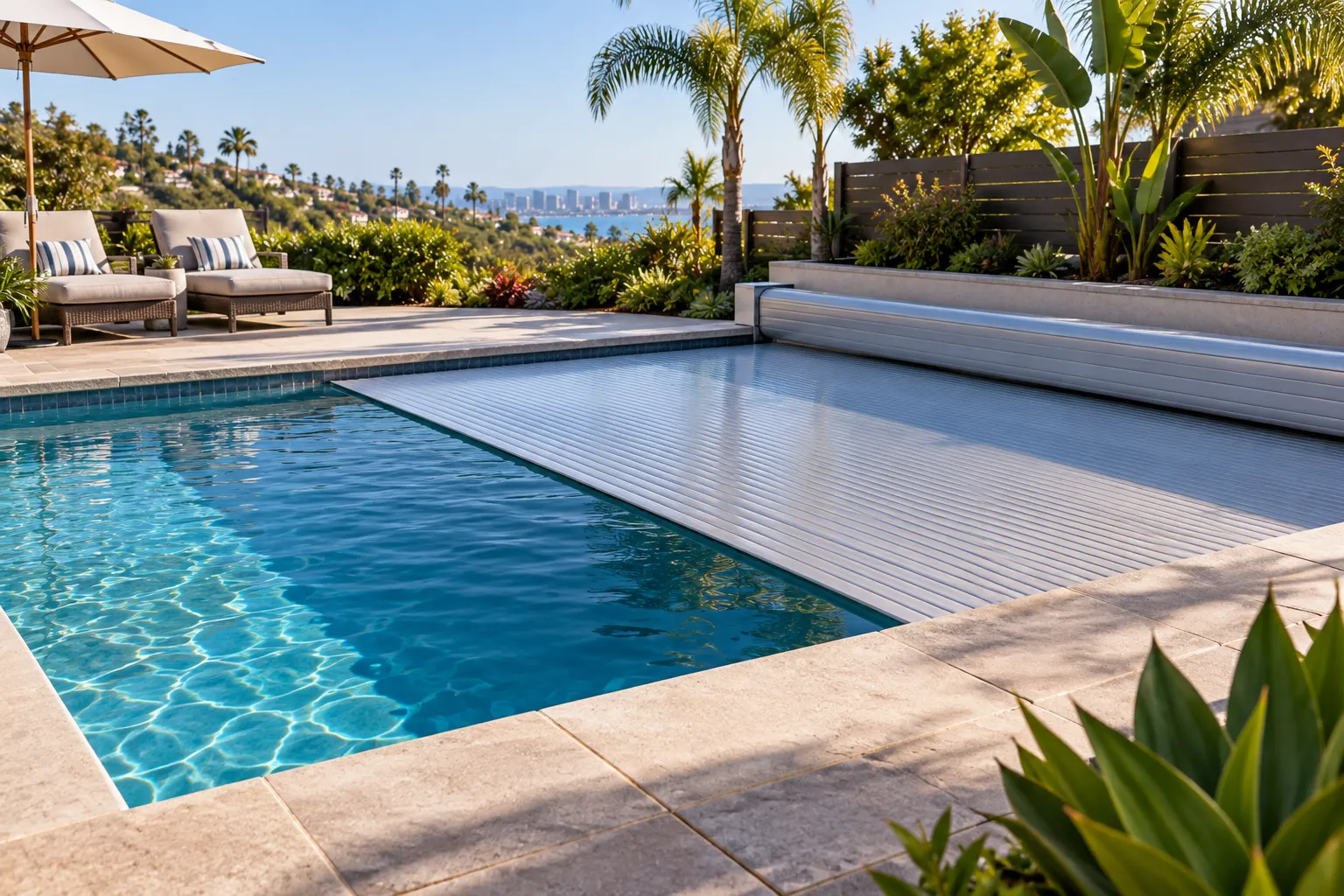
A pool cover can cut heating costs by 50-70% and reduce evaporation by up to 90-95%, according to U.S. Department of Energy guidance, which calls covering an unused pool "the single most effective means of reducing pool heating costs." It also lowers water and chemical costs, since both evaporate along with the water.
Evaporation is responsible for roughly 70% of a typical pool's total heat loss, far more than heat lost through the pool walls or floor. Every pound of 80-degree water that evaporates carries about 1,048 BTUs of heat with it — energy your heater then has to replace. A cover, whether a floating solar cover, a thermal blanket, or an automatic slatted cover, acts as insulation over that surface.
For most San Diego pools used regularly, an automatic or thermal cover combined with a solar cover for off-season months offers the best balance of convenience and savings.
Which Pool Heater Is Most Energy Efficient — Heat Pump, Gas, or Solar?
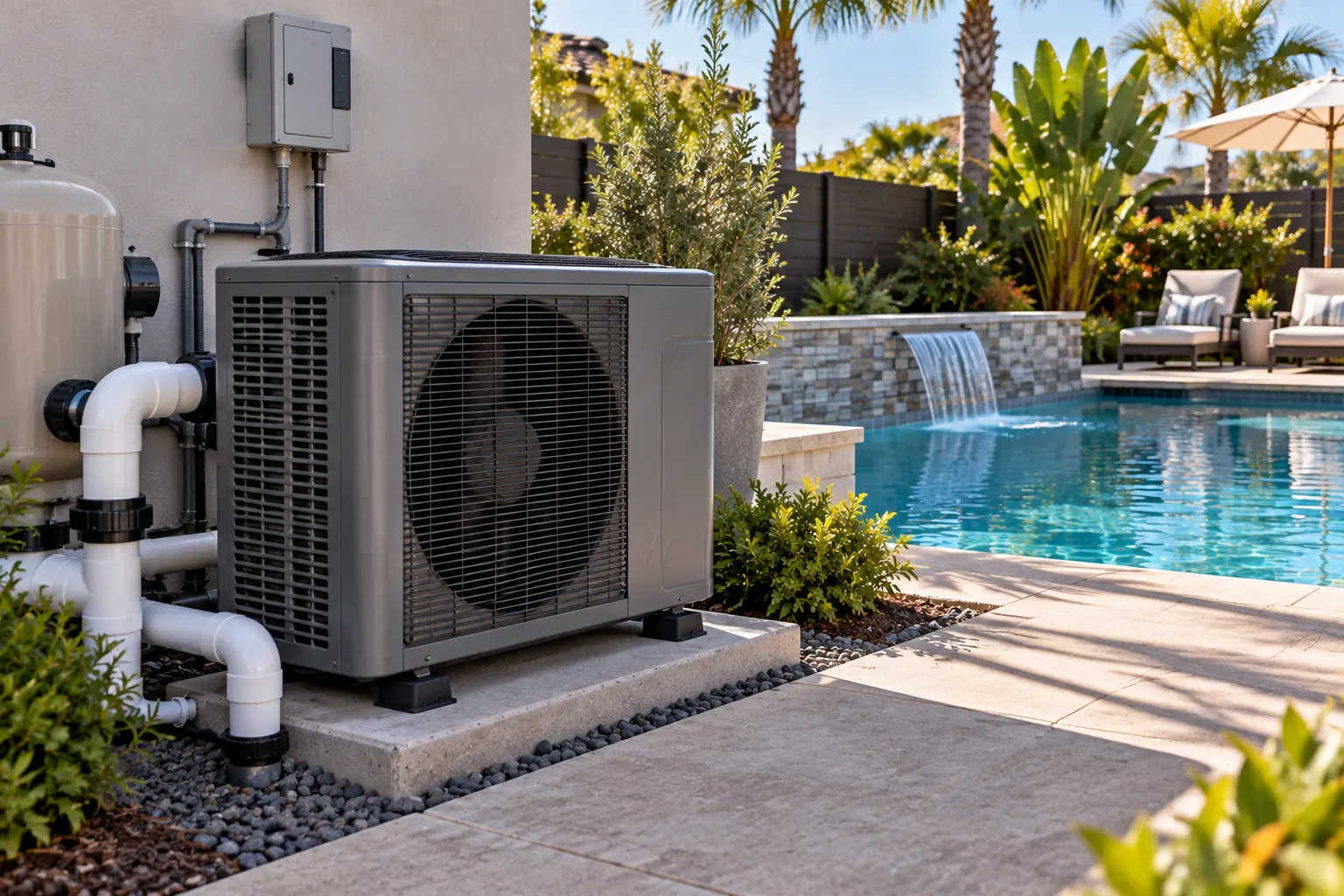
For San Diego's mild coastal climate, a heat pump is usually the most energy-efficient choice for maintaining a steady pool temperature, while a gas heater is better suited to quick, occasional warm-ups. Solar heating has the lowest ongoing operating cost of all but depends on available roof space and sun exposure.
Heat pumps don't generate heat directly — they move it from the surrounding air into the water, which is why their efficiency is measured in Coefficient of Performance (COP) rather than percentage. A COP of 5, for example, means the unit delivers five units of heat for every one unit of electricity it consumes. In mild air temperatures around 75-80°F, many modern pool heat pumps reach a COP of 5-6; efficiency drops as air temperature falls below roughly 50-60°F. Gas heaters, by contrast, are rated by thermal efficiency (typically 82-95%) and provide strong, fast heat output regardless of air temperature.
San Diego's year-round mild air temperatures make heat pumps a strong fit for pools that are used consistently across the season, especially when paired with a pool cover to reduce the heat loss the heater has to make up for.
How Can Smart Automation and Timers Cut Pump Run Time?
Automation and timers reduce energy costs by running the pump only as long as the pool needs filtration—typically 4-8 hours a day rather than around the clock—and by scheduling that runtime during off-peak electricity hours when rates are lower. Most modern controllers pair directly with a variable-speed pump so speed and duration adjust together.
A well-programmed system can run the pump at a low, efficient speed overnight or during off-peak hours for filtration, then briefly ramp up during the day if you're using water features or a cleaner. Smart pool automation systems also let you control heaters, lighting, and water features remotely, so equipment doesn't run when no one is home. Pairing automation with a variable-speed pump and a programmable heater schedule is one of the fastest ways to see a measurable drop in a monthly utility bill without changing how you use the pool.
Does Switching to LED Pool Lighting Make a Real Difference?
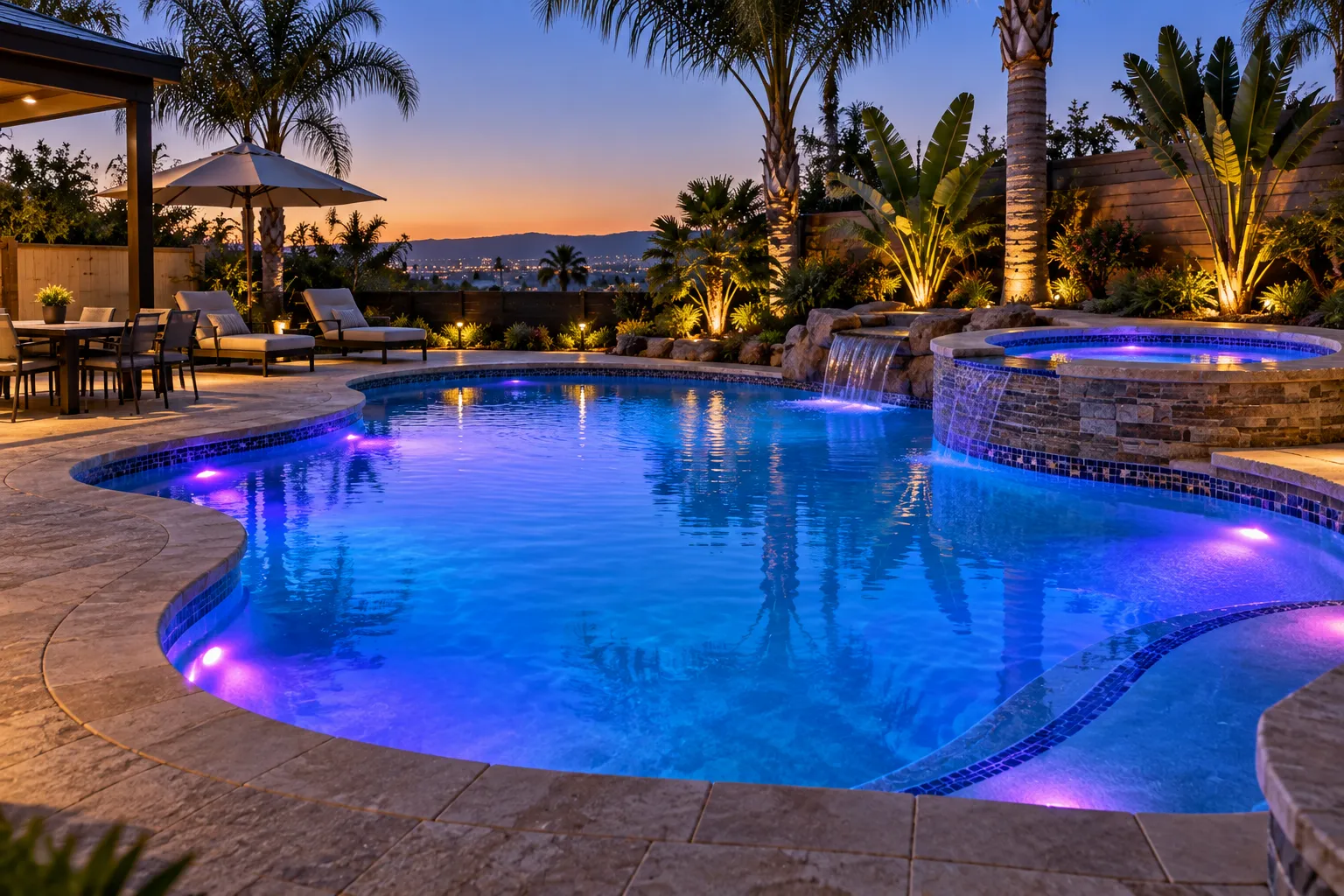
Yes — LED pool lights use significantly less electricity than older incandescent pool lights and last many times longer, which reduces both energy costs and the frequency (and expense) of bulb replacement. While lighting is a smaller share of total pool energy use than pumping or heating, it's a low-cost, low-effort upgrade with near-immediate payback.
LED fixtures also run cooler and come in color-changing options, so the upgrade often improves the pool's ambiance while lowering operating costs. For homeowners already remodeling or rewiring a pool, switching to LED then avoids the extra labor cost of a standalone retrofit later.
Can Pool Design and Landscaping Reduce Energy Loss?
Yes. Wind is one of the biggest hidden drivers of evaporation and heat loss, so windbreaks — fencing, hedges, or strategically placed landscaping — around a pool can meaningfully reduce how hard the heater and pump have to work. Pool orientation, shape, and surface area also affect how much heat and water the pool loses to the air.
A larger, more exposed water surface loses more heat through evaporation, all else being equal, which is why pool shape and placement are worth considering at the design stage rather than after construction. Because Majestic Pools also works with its sister company, Majestic Landscapes, on fencing, walls, and plantings around a new pool, energy-conscious design choices like windbreaks can be built into the same project as the pool itself rather than added as an afterthought.
Does Regular Maintenance Affect Energy Costs?
Yes — a pool with a clean filter, properly balanced water chemistry, and well-maintained equipment runs more efficiently than a neglected one. A dirty filter forces the pump to work harder to maintain flow, which increases energy use even on an efficient pump.
Simple habits—rinsing or backwashing filters on schedule, keeping the water level and chemistry balanced, and having equipment inspected periodically—help these energy-saving upgrades perform as designed. Skipping maintenance can quietly erode the savings from even a high-efficiency pump or heater.
Why Choose Majestic Pools for an Energy-Efficient Pool Build?
Majestic Pools & Spas has designed and built custom pools throughout San Diego County since 2012, and equipment selection — pumps, heating, filtration, and lighting — is part of the design conversation from day one, not an afterthought. Every project starts with a free consultation and a complimentary custom 3D design, so you can see how pump placement, cover options, and heater choice fit your specific backyard before any excavation begins. Because Majestic Pools also holds a landscaping license through its sister company, Majestic Landscapes, you can plan windbreaks, decking, and other design elements that affect energy efficiency as part of one cohesive project.
Frequently Asked Questions
How much does a typical pool pump cost to run per year?
A single-speed pump can cost roughly $200-$300 or more per year to run, depending on local electricity rates and pool size, while an ENERGY STAR certified variable-speed pump running the same schedule typically costs a fraction of that. The exact figure depends on run time, pump horsepower, and local utility rates.
Is a variable-speed pump worth the higher upfront cost?
For most pool owners, yes. Variable-speed pumps generally cost more upfront than single-speed models, but the energy savings — often 65% or more — typically pay back the price difference within one to two years, after which the pump continues saving money for the rest of its lifespan.
Should I run my pool pump all day to save energy?
No. Running a variable-speed pump at a lower speed on a shorter, well-timed schedule—often 4-8 hours a day—uses far less energy than running any pump continuously. A pool professional or automation system can help determine the minimum runtime your specific pool needs for proper filtration.
Do pool covers work with heat pumps and gas heaters?
Yes, and they're recommended with either. Because covers cut evaporative heat loss, they reduce the heat any heater must replace, which shortens heat-up time and lowers the heater's operating cost, whether it's a heat pump, gas heater, or solar system.
Is it cheaper to build energy-efficient equipment into a new pool, or add it later?
Building it in from the start is generally more cost-effective. Plumbing layout, pump sizing, and heater placement are easier and less expensive to plan correctly during construction than to retrofit afterward, which is why equipment selection is typically part of the design phase with a custom pool builder.
Ready to Build a More Energy-Efficient Pool?
If you're planning a new pool or considering a remodel, the equipment and design choices you make now will affect your energy bills for years. Majestic Pools & Spas works with San Diego homeowners from the first design conversation through final walkthrough, helping you choose the pump, heater, cover, and layout that fit both your budget and your backyard. Schedule a free consultation and take advantage of the complimentary custom 3D design currently available when you choose to build, so you can see your energy-efficient pool before construction ever begins.
Schedule Your Free Pool Design Consultation Today
Dreaming of a backyard oasis? Majestic Pools & Spas—San Diego’s award-winning custom pool designer and builder—is here to make it a reality. Schedule your free, no-obligation consultation today and take advantage of our limited-time offer: a complimentary custom pool design when you choose to build with us. Start your journey to a stunning new pool by booking online.
Majestic Pools & Spas (Visit Our Showroom)
- Address: 9951 Businesspark Ave Suite A, San Diego, CA 92131
- Phone: +1 858-790-9919
- Website: https://www.majesticpools.net/

