

Owning a swimming pool in San Diego can make your backyard feel like a private retreat, especially when warm weather encourages you to spend more time outdoors. But keeping that water clear and inviting takes consistent care. Leaves, dust, sunscreen, changing temperatures, and everyday use can all affect water quality and create more work if maintenance falls behind.
The good news is that caring for a pool does not have to consume your entire weekend. A consistent routine, combined with a few smart habits, can prevent small problems from becoming expensive ones. This is particularly important in Southern California, where dry conditions, landscaping debris, strong sunshine, and extended swimming seasons can place additional demands on residential pools.
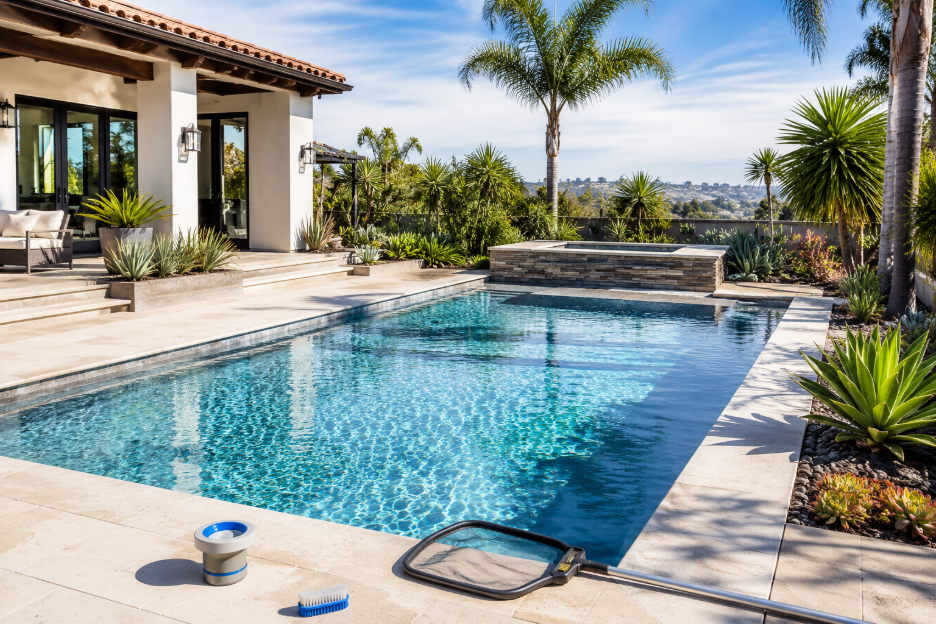
Build a Consistent Weekly Cleaning Routine
One of the easiest ways to simplify pool care is to stop waiting until the water looks dirty before acting. A pool may appear perfectly clear while debris is collected in baskets; chemistry is drifting out of balance, or algae is beginning to develop in areas with poor circulation.
A basic weekly routine should include skimming floating debris, brushing pool surfaces, checking baskets, vacuuming when necessary, and testing the water. During periods of heavy use or windy weather, some tasks may need to be performed more frequently.
San Diego homeowners should pay particular attention to leaves, pollen, dust, and small landscaping debris. Santa Ana winds and prolonged dry conditions can quickly introduce material into an uncovered outdoor pool.
Consistency makes maintenance easier because debris is removed before it sinks, stains surfaces, or places unnecessary strain on filtration equipment. Spending a few minutes on preventive care throughout the week is usually easier than dealing with cloudy water or a major algae problem later.
Creating a simple schedule can also help. For example, choose specific days for water testing, brushing, and equipment inspection rather than trying to remember when each task was last completed.
Skim Early and Brush Before Buildup Starts
A pool skimmer is one of the simplest tools available yet using it regularly can significantly reduce the amount of cleaning required later.
Floating leaves, insects, flowers, and other organic material should ideally be removed before they become waterlogged and sink. Once debris reaches the bottom, it becomes more difficult to remove and may contribute to staining or increased sanitizer demand as it decomposes.
For many Southern California properties, skimming is especially useful after windy days or when nearby trees and landscaping shed heavily.
Brushing is equally important. Pool walls, steps, corners, benches, tile lines, and areas around ladders can develop buildup even when the water looks clean. These locations may also receive less circulation, making them more vulnerable to algae growth.
Choose a brush that is appropriate for your pool surface. Plaster, pebble finishes, fiberglass, and vinyl-lined pools can have different maintenance requirements, and using an unsuitable brush may damage certain materials.
Brushing regularly helps loosen contaminants so the circulation and filtration systems can remove them. Pay extra attention to shaded corners, steps, tanning ledges, and other areas where water movement may be limited.
Keep Water Chemistry Balanced Instead of Chasing Problems
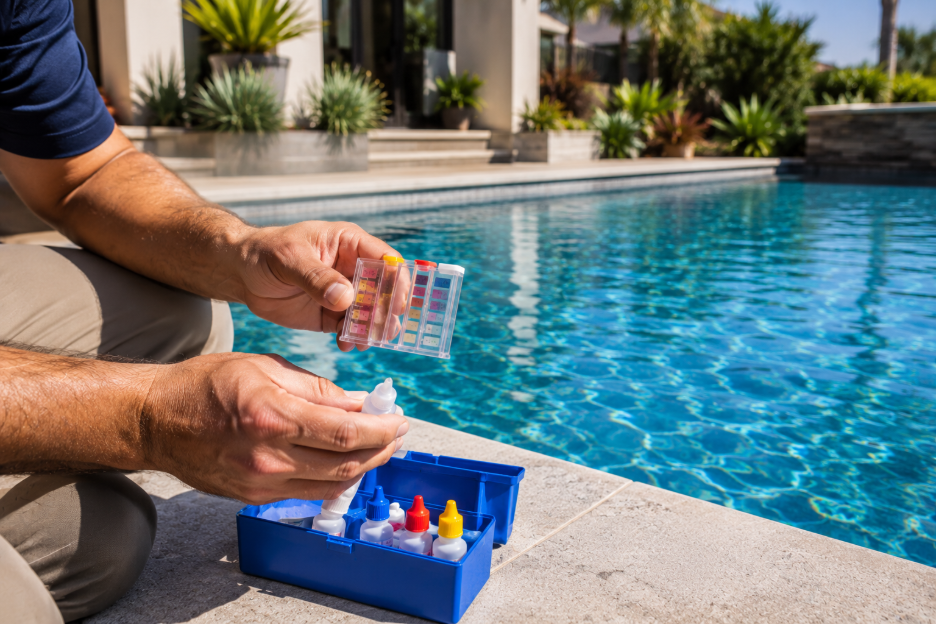
Clean-looking water is not necessarily balanced with water. Maintaining appropriate chemistry is essential for swimmer comfort, sanitation, equipment protection, and the long-term condition of pool surfaces.
Important levels to monitor generally include pH, sanitizer, total alkalinity, calcium hardness, and stabilizer. The ideal ranges can vary depending on the pool, sanitation system, finish, and local conditions.
Testing regularly allows you to make smaller adjustments before chemistry moves significantly outside the desired range. This is usually easier and more economical than trying to correct a neglected pool all at once.
San Diego's abundant sunshine is another factor to consider. Ultraviolet exposure can affect chlorine levels, while evaporation can influence water chemistry over time. Pools that receive heavy summer use may also require more frequent monitoring.
Avoid adding chemicals simply because the water looks slightly different than usual. Cloudiness, discoloration, or algae can have several possible causes. Testing first provides a clearer picture of what the water actually needs.
If balancing becomes a recurring struggle, a professional water analysis can help identify underlying issues rather than repeatedly treating symptoms.
Give Your Filter and Circulation System the Attention They Need
Your pool's circulation and filtration systems do much of the invisible work required to maintain clean water. When either system is neglected, manual cleaning becomes harder and water quality may decline.
Start by checking skimmers and pump baskets regularly. When baskets become packed with leaves or debris, water flow can be restricted. Emptying them before they become overloaded supports more efficient circulation and reduces unnecessary stress on equipment.
Filters also require periodic maintenance. Cartridge, sand, and diatomaceous earth filters have different cleaning procedures and schedules, so follow the manufacturer's recommendations for your specific system.
Avoid assuming that cleaning a filter more often is always better. Some filters operate efficiently with a small amount of accumulated material, while excessive or improper cleaning can create unnecessary wear. Pressure readings and manufacturer guidance can help determine when servicing is appropriate.
Circulation matters throughout the entire pool. Return jets should help move water effectively rather than leaving stagnant areas where debris and algae can be collected.
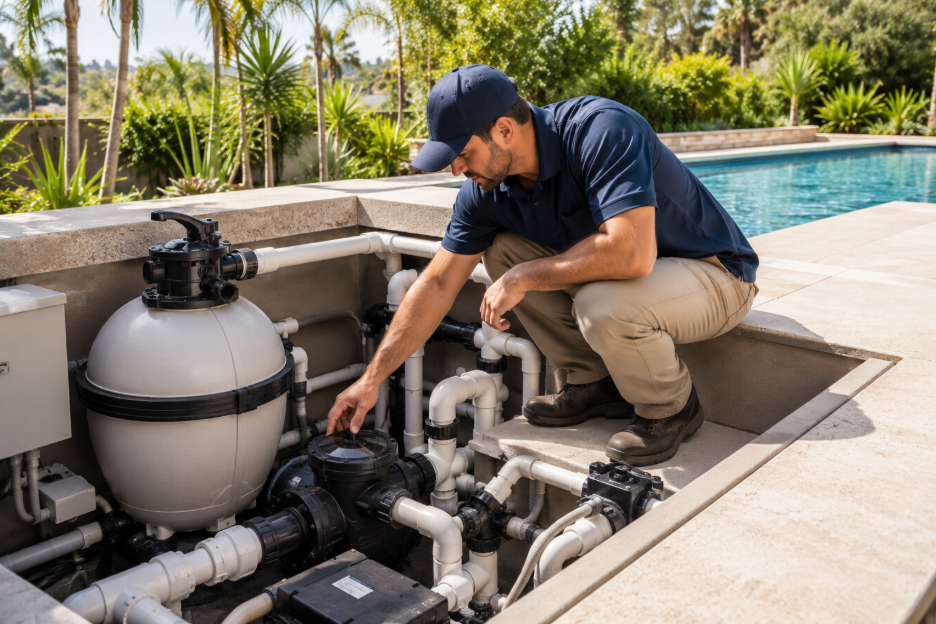
Equipment conditions matter as well. Unusual noises, air bubbles, leaks, reduced water flow, or changing filter pressure may indicate that something needs attention. Addressing these warning signs early can prevent larger repairs and keep the cleaning system working effectively.
Vacuum Strategically and Let Technology Handle Routine Work
Not every pool needs to be manually vacuumed from end to end every few days. The right approach depends on how much debris enters the water, the surrounding landscape, pool usage, and whether an automatic cleaner is installed.
Manual vacuuming provides precise control and is useful when dirt has accumulated in specific areas. It can be especially helpful after storms, landscaping work, or periods when unusually large amounts of debris enter the pool.
Automatic cleaners can reduce routine labor. Robotic, suction-side, and pressure-side systems each work differently and have their own advantages. The best option depends on pool design, equipment configuration, budget, and the type of debris commonly encountered.
Even with an automatic cleaner, occasional manual attention may still be necessary. Steps, corners, benches, narrow areas, and waterline features can be difficult for some devices to reach.
Smart pool equipment can simplify maintenance further. Automated sanitizing systems, variable-speed pumps, timers, and connected monitoring devices can help homeowners manage routine tasks more consistently.
Technology should support good maintenance rather than replace it entirely. Equipment still needs inspection; baskets must be emptied, water chemistry requires monitoring, and surfaces should be checked regularly.
Seven Habits That Make Long-Term Pool Care Easier
The biggest improvements often come from small habits repeatedly. Rather than relying on occasional deep cleaning, focus on preventing the conditions that cause water and surface problems.
1. Remove debris before sinking. A quick skim whenever you notice leaves or other material can save time later.
2. Brush commonly missed areas. Steps, corners, benches, tile lines, and shaded sections deserve regular attention.
3. Test water on a consistent schedule. Regular testing helps catch chemistry changes before they become more difficult to correct.
4. Keep baskets clear. Good water flow supports filtration and reduces unnecessary stress on circulation equipment.
5. Watch your filter pressure. Changes in pressure can help indicate when the filtration system needs attention.
6. Inspect equipment while cleaning. Look for leaks, unusual sounds, air in the system, or reduced circulation rather than waiting for equipment to stop working completely.
7. Adjust maintenance to the season. A pool needs to change throughout the year. Hot weather, increased swimming, wind, rain, and surrounding landscaping can all influence how frequently certain tasks should be completed.
For homeowners across San Diego and Southern California, seasonal flexibility is particularly useful because pools may remain active for much more of the year than in colder climates. A maintenance routine that works during a quiet winter month may not be sufficient during hot summer weather or periods of frequent entertaining.
It is also worth recognizing when professional help makes sense. Persistent algae, recurring cloudy water, unexplained chemical imbalances, leaks, damaged equipment, or significant surface staining may require more than routine home maintenance.
A well-maintained pool should be something you enjoy rather than a constant source of weekend chores. By staying consistent, keeping water moving properly, monitoring chemistry, and addressing small issues early, you can reduce unnecessary work and help protect your pool for years to come.
Schedule Your Free Pool Design Consultation Today
Dreaming of a backyard oasis? Majestic Pools & Spas—San Diego’s award-winning custom pool designer and builder—is here to make it a reality. Schedule your free, no-obligation consultation today and take advantage of our limited-time offer: a complimentary custom pool design when you choose to build with us. Start your journey to a stunning new pool by booking online
Majestic Pools & Spas (Visit our showroom)
- Address: 9951 Businesspark Ave Suite A, San Diego, CA 92131
- Phone: +1 858-790-9919
- website: https://www.majesticpools.net/

