

Before you talk about finishes or features, make sure the pool aligns with how you live in San Diego and Southern California. A pool that looks great on paper can feel awkward if it blocks the patio, creates a cramped walkway, or leaves no room for shade and seating.
Question 1: What is the primary purpose of this pool for our household?
Exercise, entertaining, family play, cooling off, relaxing, or a mix—your answer affects shape, depth, steps, benches, and whether a spa makes sense.
Question 2: How do we want the yard to function when no one is swimming?
In SoCal, the backyard is often a year-round living space. Ask how much deck space you need for dining, loungers, fire features, or an outdoor kitchen—and where foot traffic should flow.
A practical tip: walk your yard and mark “must keep” zones (BBQ, seating, dog run, side access) so the pool design supports the whole property, not just the water.
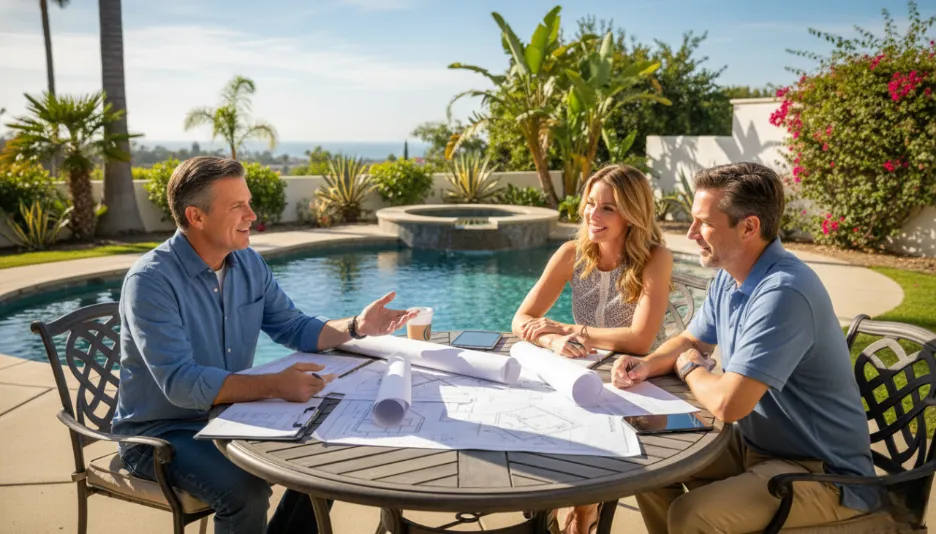
Budget Reality and What’s Included vs Assumed
Pool quotes can look similar on the surface but differ dramatically once you compare what’s included. In San Diego, costs can shift based on access, slope, soil, permitting complexity, and finish selections.
Question 3: What does the quoted price include line by line, and what is excluded?
Ask for a precise scope: excavation, steel, plumbing, electrical, shotcrete/gunite, tile/coping, plaster/finish, equipment set, startup, and cleanup. Then confirm exclusions, such as landscaping, fences, drainage upgrades, gas runs, and demolition.
Question 4: How are changes handled, and what typically triggers cost increases?
You want to know how change orders work, how pricing is calculated, and which items commonly expand budgets (extra decking, upgraded finishes, automation, lighting, retaining walls, equipment upgrades).
A strong builder will help you plan “nice-to-have” add-ons early so you can price them now, rather than deciding mid-build under pressure.
Permits, Setbacks, HOAs, and Site Constraints
Permitting and site restrictions can affect both schedule and design. San Diego neighborhoods may include HOA rules, strict setbacks, and utility easements that limit where a pool can be placed.
Question 5: Who is responsible for permits, and what is the expected approval timeline?
Clarify whether the builder pulls permits, manages plan submittals, and coordinates inspections. Ask for a realistic range based on recent local experience.
Question 6: What site conditions could complicate construction on this property?
Ask about slope, access width for equipment, soil conditions, drainage patterns, and existing structures. If you have a hillside yard, limited side access, or an older hardscape, you want a plan before excavation begins.
A good process includes a site visit that looks beyond the pool footprint—how materials get in, where debris goes, where equipment will sit, and how the crew protects adjacent surfaces.
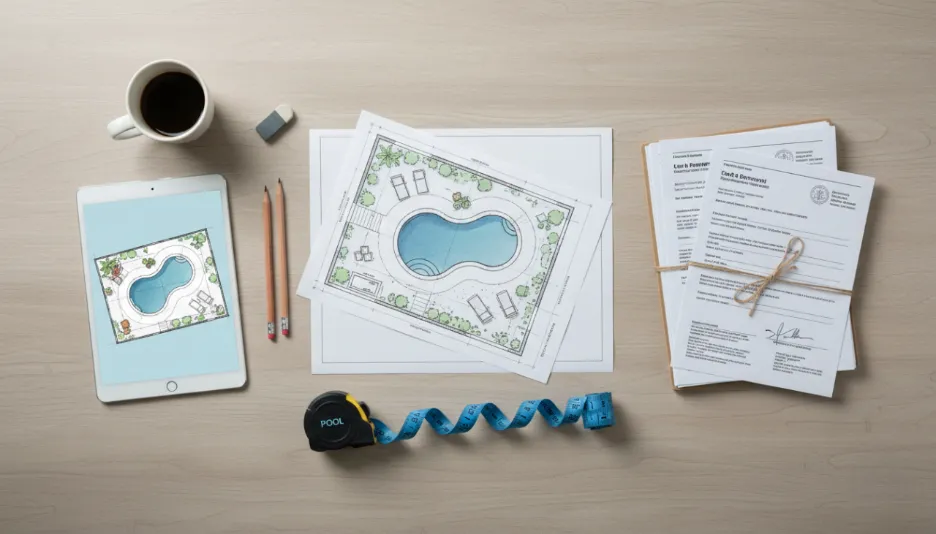
Timeline, Project Phases, and How Disruptive It Will Be
Homeowners often underestimate how many moving parts a pool build involves. Schedules can shift due to inspections, material lead times, and weather—yes, even in Southern California.
Question 7: What is the whole project timeline, and what are the major phases?
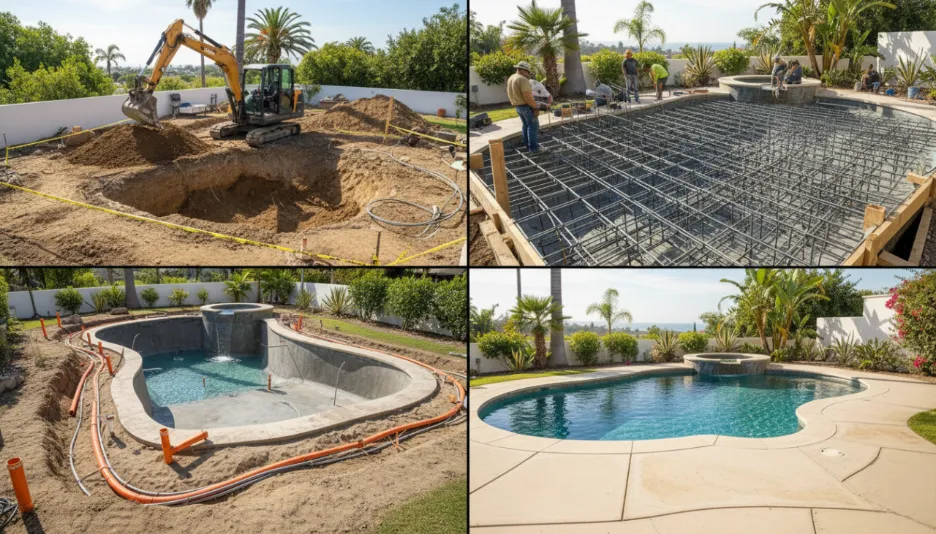
Ask for a phase-by-phase overview: layout, excavation, steel, plumbing/electrical, shotcrete, tile/coping, decking, equipment install, interior finish, fill, and startup. You’re not looking for a perfect prediction—you’re looking for a plan.
Question 8: How will the jobsite be managed day to day, and who is my point of contact?
You want to know who you call when something changes. Ask how often you’ll get updates, how scheduling is communicated, and who approves decisions on-site.
Also ask about practical disruption: noise, access restrictions, where crews park, restroom arrangements, dust control, and how they protect existing landscaping or hardscape.
Materials, Equipment, and Long-Term Operating Costs
In San Diego, pool ownership is usually year-round, so efficiency and maintenance matter. Equipment choices can affect monthly energy costs, water clarity, and how easy the pool is to manage.
Question 9: What equipment is included, and why is it the right fit for my pool and lifestyle?
Ask about pump type, filter, sanitation method, heater options, and whether automation is included. Confirm that equipment sizing is appropriate (not undersized, not overkill) and that the layout allows easy service access.
Also ask about the finish system and expectations: how long it should last, what routine maintenance entails, and the chemistry basics you’ll need to protect the surface.
An innovative add-on for busy homeowners is automation that controls pump schedules, heating, and lights—especially helpful when you want consistent operation without daily adjustments.
Warranties, Service, and How to Choose with Confidence
A pool is a long-term investment. The contract should make responsibilities clear—especially around artistry, equipment warranties, and what happens after the pool is filled.
Question 10: What warranties are provided, and what support is included after completion?
Ask about artistry warranty length, structural coverage, and how equipment warranties are handled. Confirm who you call if something fails, what response time looks like, and whether startup training is included (equipment walkthrough, basic maintenance guidance, and recommended service schedule).
Finally, ask for proof points: recent local projects, references, and photos of builds like your yard size and style. In Southern California, the best choice is often the team that communicates clearly and plans thoroughly—not just the lowest quote on the first.
Schedule Your Free Pool Design Consultation Today
Dreaming of a backyard oasis? Majestic Pools & Spas—San Diego’s award-winning custom pool designer and builder—is here to make it a reality. Schedule your free, no-obligation consultation today and take advantage of our limited-time offer: a complimentary custom pool design when you choose to build with us. Start your journey to a stunning new pool by booking online
Majestic Pools & Spas (Visit our showroom)
- Address: 9951 Businesspark Ave Suite A, San Diego, CA 92131
- Phone: +1 858-790-9919
- website: https://www.majesticpools.net/

